
M.scio has become the first intracranial pressure monitoring device designed for long-term implants to be approved in Australia.
The device offers new options for managing hydrocephalus – a chronic, neurological condition where cerebrospinal fluid (CSF) accumulates and builds up in the brain, affecting people of all ages – from newborns to older Australians.
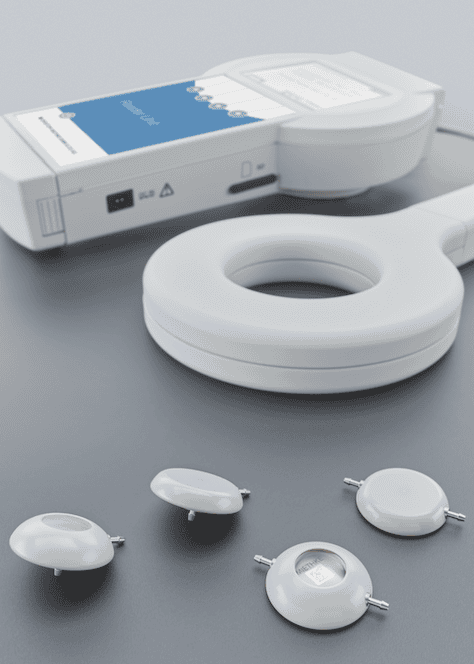
M.scio is a coin-sized device implanted along the shunt tubing at the burr hole site, with a compressible silicone membrane responding to changes in CSF pressure, which is detected by a measuring cell and transmitted telemetrically to a hand-held receiver for real-time intracranial pressure (ICP) monitoring.
The device is primarily used in patients with complex hydrocephalus, with M.scio supporting management of shunt-related complications, CSF disturbances and ICP control.
PATIENT COHORTS
In Australia, around 1 in 800 newborns is affected by hydrocephalus, caused by abnormal CSF accumulation in the ventricles, leading to raised intracranial pressure and neurological complications.
Meanwhile, Normal Pressure Hydrocephalus (NPH) typically presents in people in their 60s and 70s and is often misdiagnosed due to similarities with Alzheimer’s and Parkinson’s disease.
Prince of Wales Private Hospital adjunct associate professor, neurosurgeon and spine surgeon Dr Raj Reddy said international studies showed a prevalence in older adults most commonly around 1 – 2 per cent, though the true prevalence in Australia remained undetermined.
“While Normal Pressure Hydrocephalus (NPH) is one of the few truly treatable causes of dementia-like symptoms, the challenge lies in its diagnosis,” Dr Reddy said.
“For this reason, it’s essential for everyone involved – from treating physicians to family members and patients – to consider that the triad of gait disturbance, cognitive decline, and urinary incontinence could point directly to NPH, opening the door for effective, life-changing treatment.”
CLINICAL USE
Adelaide Women’s and Children’s Hospital Department of Neurosurgery medical unit head Dr Xenia Doorenbosch said the findings reinforced the value of M.scio in reducing procedural burden while also supporting recovery and quality of life.
“M.scio lets us review intracranial pressure in real time and in everyday settings – not just a snapshot during a single hospital admission,” Dr Doorenbosch said.
“It shows patterns that reveal what’s really happening and how a patient’s pressure is related to their symptoms and daily activities. This gives a clearer picture, helps tailor a shunt setting, detect problems sooner and reduce hospital visits.
“Most importantly, it offers patients and families greater certainty and reassurance.”
M.scio has been in use for more than ten years in the UK, where studies showed patients often needed fewer scans, hospital visits and surgeries.
Cambridge University Hospitals paediatric neurosurgery consultant Claudia L Craven said M.scio had become an “essential tool” in UK hydrocephalus surgery, “providing accurate, real-time shunt diagnostics that reduce unnecessary anaesthetics imaging and hospital admissions, particularly in children.”
“Data from centres including NHNN Queen Square and Royal Hallamshire Hospital show it is both clinically effective and cost-efficient, reducing repeat investigations and shunt revisions.”
M.scio is currently being introduced to specialist neurosurgical centres across Australia.