Tasmania’s former Chief Clinical Information Officer Dr John Lambert has warned that the state’s Bluegum Health Transformation programme cannot deliver its original scope under current arrangements, estimating that between $500 million and $700 million is needed to complete the work.

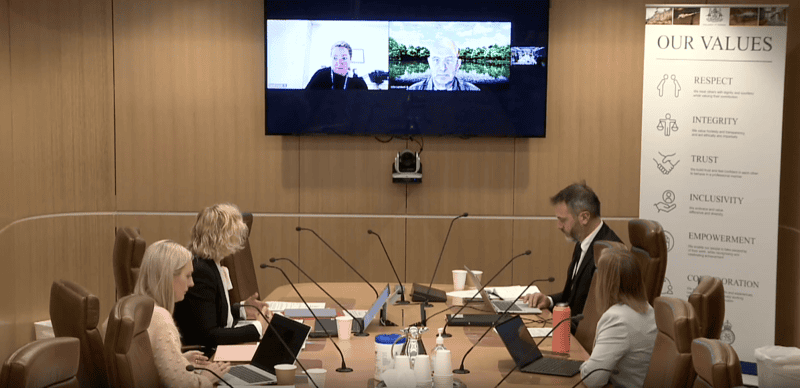
Giving evidence to a Tasmanian parliamentary inquiry on Thursday, Dr Lambert said digital health projects had been plagued by budget overruns, delays and poor governance – while the contract for the planned statewide Epic electronic medical record (EMR) remained unsigned.
“Under the current construct, as I see them externally, not knowing all the inner details, the answer is no. The original scope of the transformation cannot be delivered. The most important thing is it needs to be considered a priority for health and appropriately funded as such from the Minister down,” he said.
He said the programme needed “Cultural change and adequate funding, which is in the order realistically of 500 to 700 million. But currently they’re getting dribs and drabs of leftovers from the budget.”
Dr Lambert, who left the Department of Health earlier this year, was appearing before the Legislative Council’s Government Administration A Committee inquiry into the department’s financial and operational performance.
The Tasmanian government’s original Digital Health Transformation Strategy anticipated an investment of $476 million over 10 years from 2022-23, covering the statewide EMR and supporting digital health initiatives.
Dr Lambert said that when he accepted the CCIO position in early 2025, he understood the programme was fully funded to approximately $430 million. He subsequently discovered Treasury had approved a smaller allocation of about $30 million annually over 10 years, with the Department of Health expected to contribute the remainder.
He told the inquiry the programme’s funding had since been progressively reduced.
As previously reported by Pulse+IT, Epic was named preferred vendor for the statewide EMR in May 2025, with contract negotiations underway at the time.
Dr Lambert said the contract remained unsigned and was unlikely to be finalised before June 2027.
“The funding of the entire project for the EMR component of the project is inadequate currently and the overall envelope of funds to do all of the necessary prerequisite projects is absent as well.
“So, I’m very concerned, because without the prerequisite projects, they will never be successful at rolling out something as big and complex as Epic.”
Dr Lambert also questioned the government’s commitment to the programme, saying it had been eclipsed by other priorities.
“And I don’t mean this as an insult or in a negative way. It is simply a matter of, in my opinion, fact.
“And it’s totally okay for governments to do this. But it was clear to me that the government was more interested in building a stadium than building a transformed health system.”
He said the programme had experienced repeated delays to its public announcement and that government support appeared weaker than he had initially understood.
Project governance concerns
Dr Lambert said he inherited responsibility for a portfolio of digital health projects around May 2025 and found many were over budget, behind schedule and failing to deliver their intended scope.
The programme included clinical systems, billing, meals management and technical infrastructure, alongside the EMR.
“When I inherited those projects, they were in a lot of trouble. So, there was, in some cases, absent governance or infrequent and ineffective governance.
“The projects were invariably over-scheduled, over-budget and not delivering their initial scope of effort.”
Dr Lambert described steering committees that failed to meet for months, poor attendance by the operational areas responsible for the projects and reporting that did not allow executives to make informed decisions.
He said the problems were particularly pronounced in clinical projects requiring significant changes to healthcare delivery, while more technical projects were generally better scoped and managed.
“The membership of many of these steering committees was not particularly well thought out – it was more a case of who was available and interested rather than who was the right person to make these decisions.
“The next problem was attendance. There were many meetings where the only people who turned up were the project team and the technical people and the business barely turned up at all.”
Following changes to governance and reporting, senior executives began questioning the extent of delays and overruns.
“Why are these projects taking two and a half times as long as they were supposed to? Why is this budget two to three times as much as the original budget we approved? How do we know we’re getting the value out of this project?”
Dr Lambert said he had returned the projects to green reporting status – although the original budget and schedule overruns could not be reversed.
He also raised concerns about changes to the department’s organisational structure following his departure.
Dr Lambert said he understood the Office of the Chief Clinical Information Officer no longer existed in the new structure, with responsibility for Bluegum returning to Chief Information Officer Brent Feike, a situation he said was “impossible.”
“There is no possible way he can give it the time it needs and be an effective CIO. But he knows that.”
He attributed the change partly to his departure and the programme’s reduced budget.
Dr Lambert said the CIO’s reporting line had also changed, placing the position under the deputy secretary responsible for infrastructure rather than reporting directly to the department secretary, noting “Everything I can see says that Blue Gum is just being put in a back room until somebody decides it’s important.”
He warned that delays were increasing the risks and costs associated with continuing to operate ageing clinical systems.
“The fact that it’s been deferred means we are keeping systems alive that have no rights to still be running.
“All this has done is increase the risk to Tasmania, increasing the cost to Tasmania. It is an atrocious situation to be in.”
Workforce and procurement restrictions
Dr Lambert also defended the use of specialist ICT contractors, telling the inquiry Tasmania’s Treasury procurement requirements made it difficult to recruit the expertise needed for large-scale digital health programmes.
His evidence follows ABC News reporting in August that $61 million in Bluegum labour hire contracts had been awarded without open tender, comprising 742 contracts valued at $99,999 or less.
The contracts were awarded to 65 companies, with 22 receiving 10 or more contracts.
Dr Lambert said the department had attempted to recruit staff directly but filled only three positions after advertising approximately 71 jobs. That recruitment process had begun before he joined the department.
He said the department had been prevented from offering longer-term labour hire arrangements suitable for specialised ICT work and had instead relied on contracts requiring repeated renewal.
“These $100,000 rollover projects were just for the birds. That caused massive problems in trying to recruit appropriate people and largely led to a lot of the projects not running as well as they could because we couldn’t get the right people in Tasmania to do the job.”
Dr Lambert said Treasury had withdrawn approval for the arrangements, resulting in the termination of contractors approximately two months earlier.
“All of them were abruptly terminated when Treasury took away the permission they had given Brent in the past. So, that was a real mess.”
He said fixed-term employment contracts had also been terminated because of the programme’s budget position.
Dr Lambert told the committee that specialist contractors typically accounted for 50 to 60 per cent of teams working on large digital health projects and that this was an expected and reasonable arrangement.
He said Treasury’s prohibition on longer-term ICT labour hire contracts was unlike anything he had encountered in other Australian jurisdictions.
“It is the worst thing for your ICT projects in Tasmania. You will never be as successful as you could be until you fix this problem.”
Leadership and organisational culture
Dr Lambert said he had also struggled to secure direct engagement with the Health Minister about the transformation, despite expecting regular briefings alongside Department of Health secretary Dale Webster.
He said he had been told the ministerial office did not want to meet with him, although he did not know whether the minister personally was aware.
“At my level, I would normally sit with Dale and brief the Minister on a project worth half a billion dollars. I never got that opportunity.”
He said Mr Webster had been supportive of his efforts to improve the programme’s governance and had been regularly briefed on the problems. Dr Lambert said he knew the minister had been made aware of the labour hire contracting issues and would have known about the overall budget situation, but he did not know whether project-level governance concerns had been raised.
Dr Lambert also alleged that senior employees displaying inappropriate behaviour had been protected or promoted because of their relationships with more senior executives.
He said he had encountered instances where staff behaviour was inconsistent with the department’s stated values and attempts to address those issues had been unsuccessful.
The committee raised a LinkedIn post Dr Lambert published following his departure, in which he referred to a mismatch between his values and those of the organisation.
“To not be supported in trying to follow the values of the organisation and treat people according to those values, and then get, in a sense, punished for it, is appalling. And that’s what that post was about.”
He said the mismatch between the department’s stated and actual culture contributed to his decision to leave.
His evidence contrasts with the department’s recent public account of Bluegum’s progress.
In September, the Department of Health told Pulse+IT it had begun the next phase of the programme, including preparatory work for the statewide EMR. It highlighted initiatives already delivered, including hospital Wi-Fi and e-referrals.
Dr Lambert told the committee that successful transformation would require sustained investment and leadership across the entire health system, including engagement with GPs, specialists, allied health providers and aged care facilities.
“This is a massive change involving every human being inside health. And if you’re going to do this successfully, it involves all the healthcare practitioners outside health. So the GPs, the specialists, the allied health, the community practitioners, aged care facilities, right?”
Asked what the committee should put to the minister, department secretary and CIO when they appeared before the inquiry, Dr Lambert suggested questioning the government’s commitment to the transformation and its funding.
“Convince us that this is a priority. Where’s the money coming from? Where’s the motivation to your teams?”
Other witnesses at the 15 October hearing included University of Tasmania Pro-Vice Chancellor, Health Professor Graeme Zosky, COTA Tasmania policy officer Jan Davis, Health and Community Services Union secretary Robbie Moore and union members, and Ray Bange OAM.
The Tasmanian Department of Health has been contacted comment..