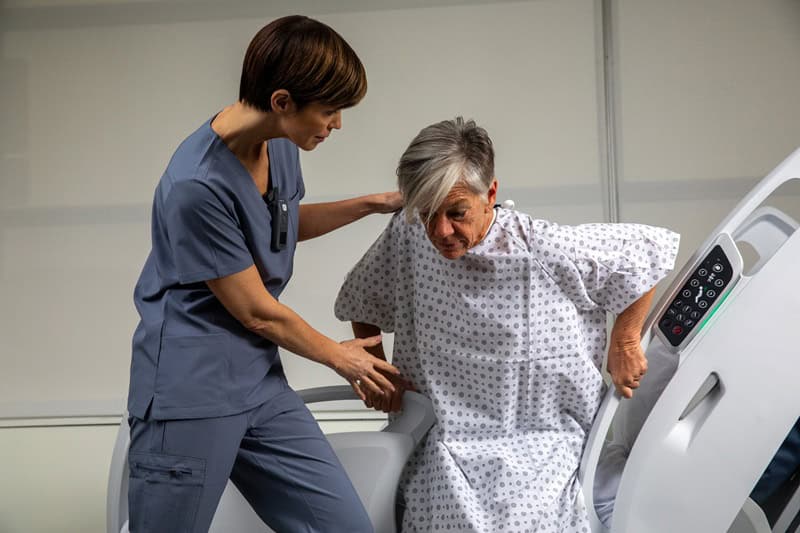
Stryker, a global leader in medical technologies, says increasing operational complexity across communication, coordination and workflows is becoming a growing challenge for hospitals and health services.
Stryker’s Vice President and General Manager of Medical APAC Michael Badenhope said many hospitals still contend with disparate, non-interoperable systems that don’t effectively communicate with one another, leading to fragmented patient data, delays in care and increased administrative costs, which can impact patient outcomes.
“What we consistently hear from hospitals leader is that getting the right information to the right person at the right time is difficult,” Mr Badenhope said.
“Teams are often leveraging multiple systems, while managing alerts and priorities simultaneously, which can create delays in communication and decision-making.”
According to Stryker, communication failures are a leading contributing factor in the six most reported sentinel event types, occurring with team communication and staff-to-staff communication at patient handoffs. Over time, many healthcare environments have evolved practical workarounds and communication processes to help teams manage increasing complexity of fragmented systems and workflows.
“We are focused on automating communication workflows that can streamline and enhance the way clinicians receive and share information,” Mr Badenhope said.
Stryker said hospitals were increasingly looking beyond standalone communication systems toward building integrated, data-driven care platforms. With many processes now automated, the emphasis is moving to improving the clinician experience and retention, streamlining workflows.
The company’s Vocera platform combines wearable communication devices including the Smartbadge and Sync Badge with workflow integration, orchestration and mobile communication tools designed to connect devices, departments and data.
Launched across Australia and New Zealand last year, the Sync Badge is a hands-free wearable device that allows clinicians to contact colleagues by name, role or team, escalate urgent requests and coordinate rapid response workflows.
Mr Badenhope said communication and workflow were increasingly converging within hospital operations.
On their own, communication tools connect people, but they don’t always ensure that action follows.
“Automating workflow starts with integrating systems so data can be leveraged. Our intelligent workflow engine is the heart of a connected infrastructure that unifies your EHR, medical devices, digital health solutions, staffing systems, clinical communication and more – aggregating information and routing it where it needs to go.”
Stryker notes that hospitals are under growing pressure to improve operational coordination without necessarily adding new resources, making workflow visibility and escalation management increasingly important.
The company also believes alarm fatigue and interruption overload remain significant operational issues for clinical teams, particularly in busy emergency departments and inpatient wards.
Clinicians are frequently exposed to a constant stream of alarms, announcements and notifications that could interrupt workflows and slow responses.
“The accumulation of alerts, notifications and interruptions can contribute to cognitive load and workflow disruption for clinical teams, particularly in high-pressure environments,” Mr Badenhope said.
“That’s where platforms like Vocera play a role sitting across systems to connect alerts, communication and workflows, so responses are coordinated and accountability is clear.”
Stryker said successful implementation of new communication and workflow technologies also depend heavily on change management and reducing reliance on legacy processes.
“Change management with a clear strategy is key to enable change away from the embedded workarounds.”