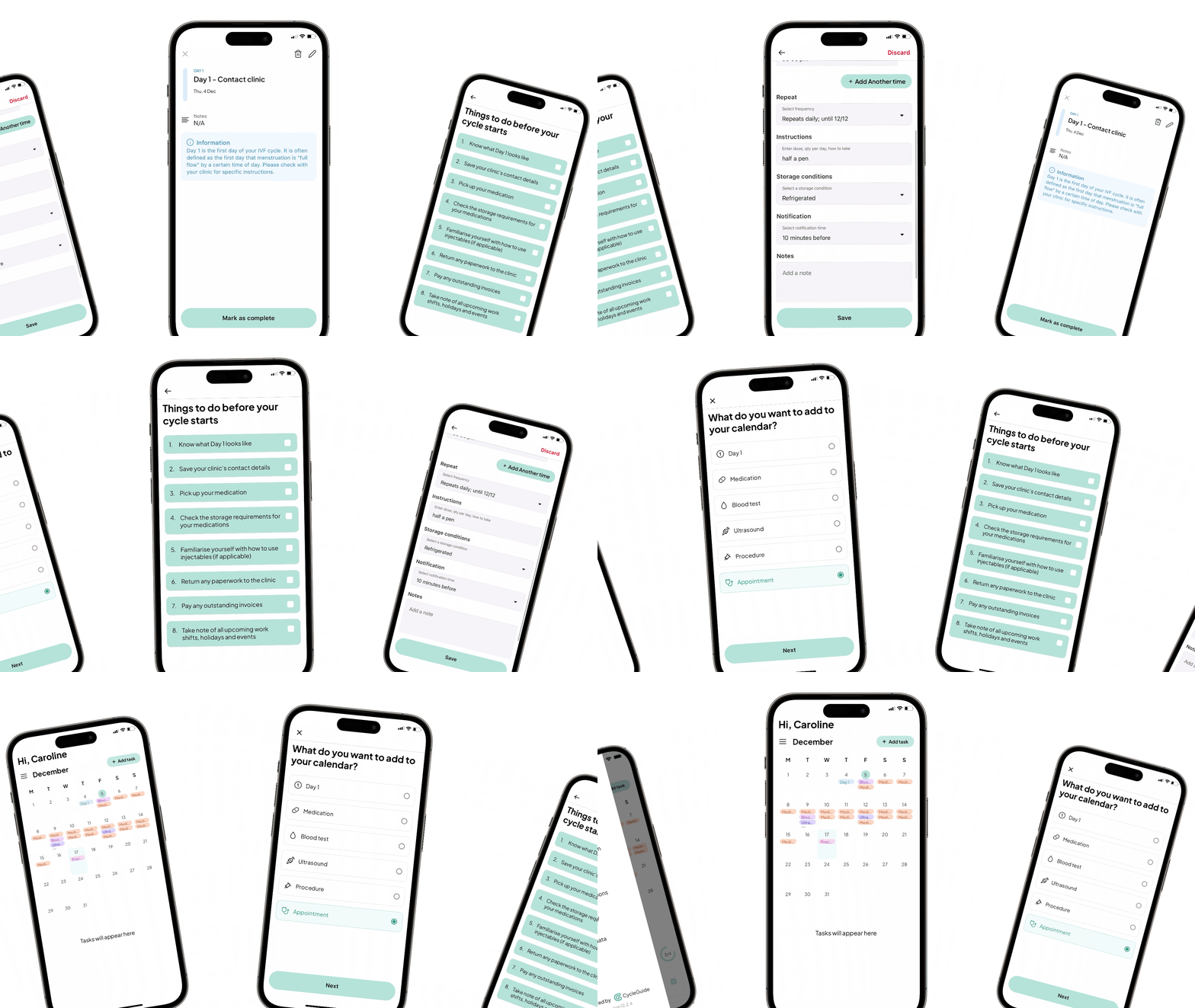
A Victoria-based doctor whose fertility treatment app was recently shortlisted for a European Fertility Society award is looking to bridge a gap in IVF care by helping patients manage medications, appointments and treatment instructions between clinic visits.

CycleGuide was developed by Dr Caroline Fiddler following her own experience with IVF, after she became frustrated with the amount of information and responsibility patients were expected to manage at home.
Dr Fiddler told Pulse+IT that while she had received quality clinical care, treatment instructions relied heavily on paper schedules, phone calls and patients recording changes themselves.
“I didn’t realise how much people have to handle at home,” she said, noting that patients often received updated instructions following blood tests or ultrasounds, sometimes while at work or otherwise unable to easily record the information.
“When you do get that information, you scribble it down on anything – whether it’s the closest piece of paper, a napkin, a post-it note, back of your hand and you don’t actually get any written confirmation. That was a bit of a hole,” Dr Fiddler said.
CycleGuide, which launched in January 2024, was designed around a calendar and task list, allowing patients to record medications, blood tests, ultrasounds, procedures and appointments and receive reminders for time-sensitive tasks.
Dr Fiddler said the app’s recent European Fertility Society award shortlisting provided some external validation for the problem she had set out to address.
She said she deliberately kept the app flexible rather than requiring patients to select a particular treatment pathway at the outset.
“Every time, I tried to focus on me as a patient – less so as a doctor, more as a patient – to ask ‘how can I make it as simple as possible’,” she said.
Patients currently enter their treatment instructions themselves, with the app intended to supplement rather than replace information provided by their fertility clinic.
Medication details can be entered in free text, alongside instructions and storage information, while appointments, tests and procedures can be added and edited as treatment changes.
Dr Fiddler said the app was initially designed with clinic integration in mind, potentially allowing nurses to send treatment instructions directly to a patient’s phone.
However, she opted to develop the first version as a standalone patient tool so its use was not dependent on individual clinics or health services adopting the technology.
“I built it with integration in mind, but we decided to keep it as a MVP, minimum viable product, and simple so that we weren’t reliant on clinics agreeing or hospitals agreeing,” she said.
“We primarily made it for the patient, but I built it thinking of the clinician in mind, because I think ultimately that’s the best version.”
She said a future integrated version could provide patients with digital confirmation of instructions following a phone call, while potentially reducing medication errors and follow-up calls to clinics.
Dr Fiddler said better organisation could also reduce uncertainty for patients and interruptions for clinical staff when patients need to check whether they have correctly followed their instructions.
“For clinics, it’s less of an interruption to either your nurse’s day or even your theatre list,” she said.
“I think there’s a lot of unnecessary phone calls that they can avoid by having people either feeling more in control or actually being more in control and more organised.”
CycleGuide is available in Australia and New Zealand via the Apple app store, with Dr Fiddler currently exploring international expansion.
Dr Fiddler said a similar approach could be applied to other areas of healthcare where patients undergo complex outpatient treatment and carry significant responsibility for managing appointments, medications and instructions at home, however, she noted that keeping the technology simple remained central to the concept.
“If you can keep your original idea for why you created it, then you will probably be able to carry out your aim accurately – rather than getting carried away with fancy extras that actually don’t help the patient or the clinician.”