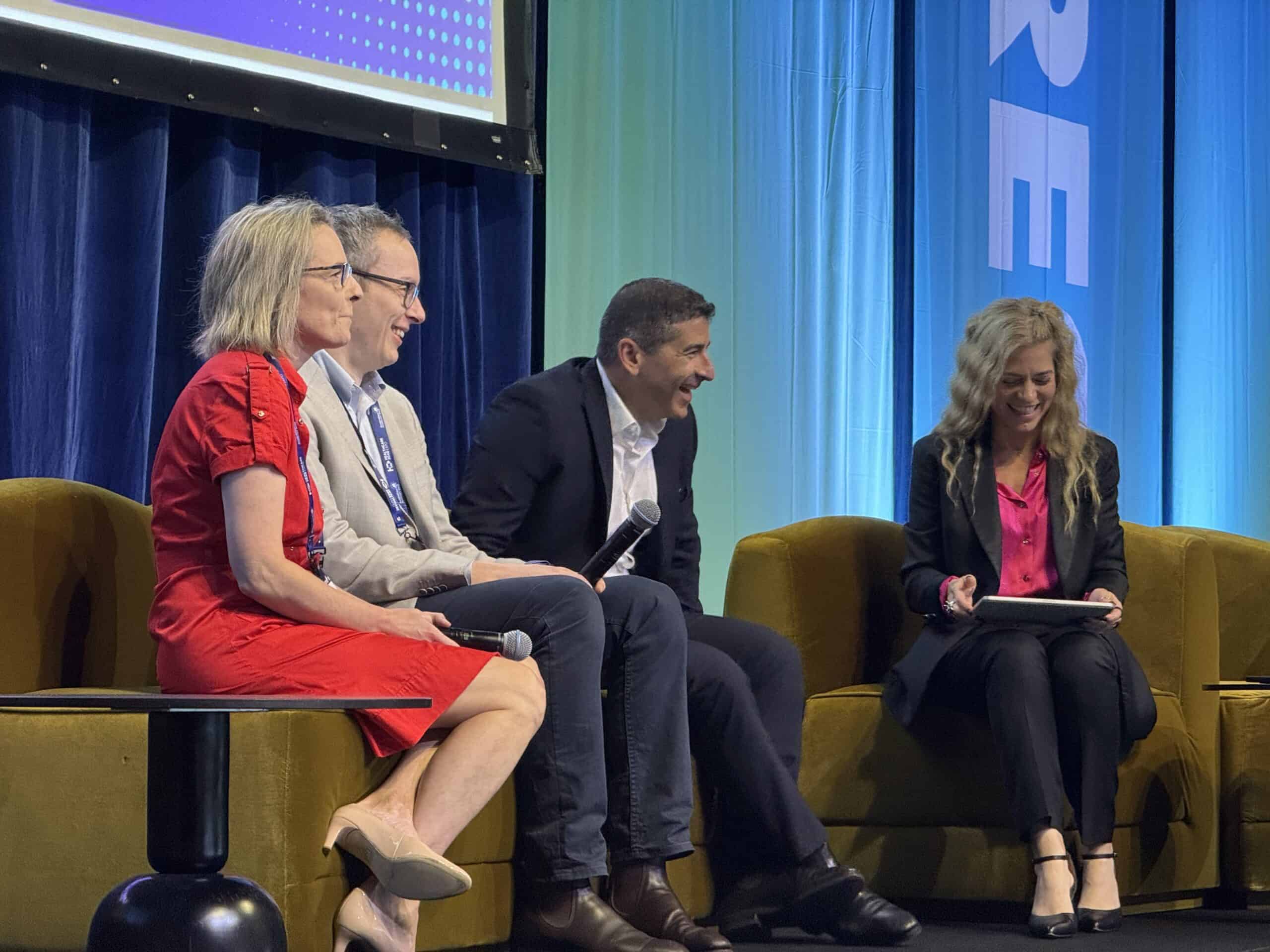
Australia’s end-to-end digital health vision will keep progressing as technology improves, but the system is still struggling to translate ambition into scaled, usable change, according to a recent expert panel discussion.
eHealth NSW chief executive Richard Taggart said one of the biggest shifts from a decade ago was that “digital health is part of the leadership of the health system,” with executives now “helping shape the future of our health system.”
He said there was “a real appetite for digital” across both the workforce and consumers, noting, “They want things online. They want things instantly. They want access. They want their scribes now.”
Mr Taggart said the constraint was not lack of opportunity, but capacity – pointing to the “incredible progress” Australia had made building digital capability, but adding that the system still faces “limited capacity and unlimited demand.”
He argued the next phase had to focus on “higher order problems that could really move the needle on funding and impact to consumers” – starting with “translation of research and innovation.”
“We are one of the world leaders in primary research in health. But when it comes to translating that research so it gets in the hands of consumers, we’re sort of at the bottom of the rungs – we really do not do any translation at the scale that we should do.”
He also noted “the bureaucracy that stood in the way of technology,” particularly as people moved from aged care to acute care, disability services and the transition back,” and said leaders should bring the system’s funders and providers into the same room.
“We need to get the Commonwealth around the table, home care and aged care, state and private providers.”
“How are we going to solve this? What’s the investment? What’s the technology? It isn’t just about connecting the information. It’s also about connecting the minds,” Mr Taggart said.
Mr Taggart said the next step was “following it up with some of the bureaucracy changes that need to happen,” including “how do we put some of the good work into the procurement that we do?” and “how do we keep our health systems on track for delivering some of these standards at scale?”
He said standards should inform “how we go to market,” while “not excluding players and providers that haven’t yet got to there,” while instead “encouraging them to get to that standard.”
Telstra Health Chief Technology Officer Farhoud Salimi also celebrated where Australia was at with digital health, pointing to recent national building blocks, including the legislative share by default framework and investment in modernising My Health Record, alongside the Sparked accelerator which he said “engaged the community to actually get our FHIR standards up and running.”
However, he argued the health sector still struggled with “legacy tech, locally installed with old technologies and old languages,” as well as systems that “talk different languages to one another.”
Mr Salimi suggested the solution was “investing in an open standard with FHIR at the core of it – rebuilding, making sure the data model’s the same, the terminology and the language is the same.”
“What I’m not saying is that we need a single system. But we need an ecosystem that talks the same language to one another.”
Mr Salimi warned that interoperability alone would not solve AI-era problems if the underlying data was not fit for purpose.
“We can make that plumbing work. We can’t make the water flow through it effectively.”
He said new tools were “data hungry” and required “good curated data sets that are accurate in the source systems,” noting the work involved “data literacy, data accuracy – without friction,” so that system data would accurately reflect “what happened in the real world.”
Meanwhile, eHealth Queensland acting Deputy Director-General Tanya Kelly pointed to a “two speed” problem, suggesting that health systems were “relatively slow because of their size and scale,” while consumers were “moving much quicker.”
Ms Kelly said the sector was just now “starting to experience the AI-powered consumer.”
She said the “big issue” was “the long arc vision,” and “whether or not in the next few years we can really articulate that.”
The panel also argued consumer behaviour was already shifting.
Mr Taggart said people “don’t Google anymore, they talk to a chatbot,” while Ms Kelly said adoption follows value: “the thing that is exceeding the speed of trust is the speed of value. So when there’s value, things happen.”
She suggested engagement with My Health Record shifted because “there was no relevant information in there. And now there is and there’s value.”
Mr Taggart added that consumer-facing AI may “balance the scales in healthcare,” but warned governance was lagging behind capability – with accountability gaps remaining.
“If you use one of these big chatbot vendors – if you read the small print, there’s no accountability for the advice that they give you. I think that’s the gap that we need to solve.”
The panelists spoke at Australian Healthcare Week in Sydney last month.