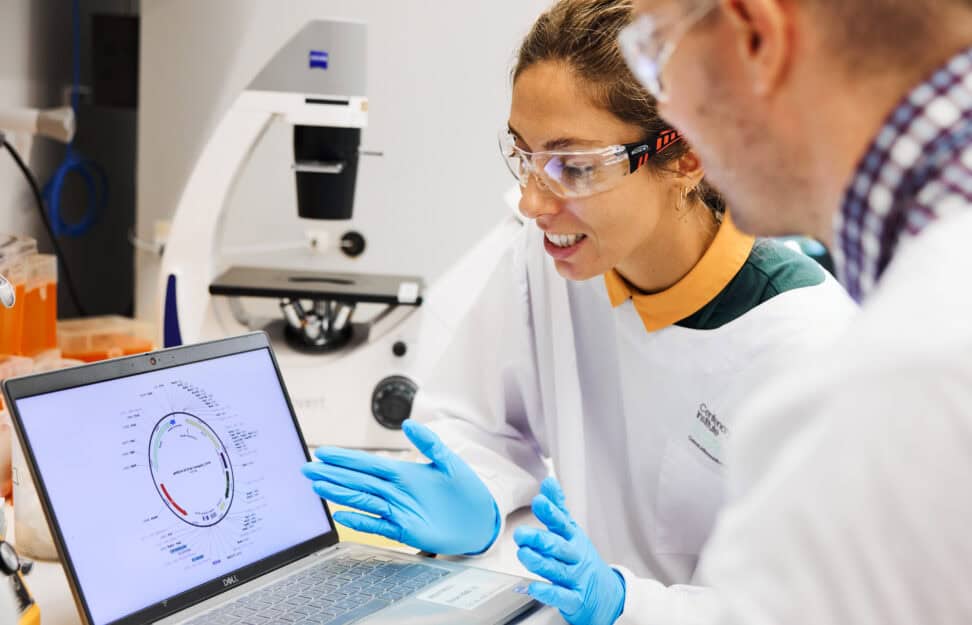
Sydney clinician and AI researcher Dr Yagiz Aksoy is working to bring three Australian-built cancer prediction tools into a single platform, with the aim of taking the technology through regulatory approval and into clinical use.
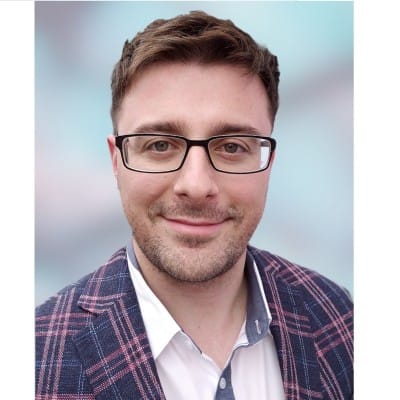
Dr Aksoy heads the Aksoy Lab for Clinical and Translational AI within the Centenary Institute’s Biomedical AI Centre and is also a Senior Research Fellow in the Melanoma and Skin Cancer Group at the Daffodil Centre, a joint venture between Cancer Council NSW and the University of Sydney.
A practising doctor with a PhD, Dr Aksoy develops machine learning systems designed to help clinicians make decisions around cancer treatment and follow-up.
His work has so far included tools targeting malignant colorectal polyps, medullary thyroid carcinoma and mesothelioma, developed using Australian data and involving more than 2,400 patients.
The tools are currently available free to clinicians as research instruments but are not yet part of routine clinical care.
Dr Aksoy said the gap between developing a clinical AI model and successfully putting it into practice remained a significant challenge for the sector.
“Clinical AI has four jobs and most projects only do the first one,” he said.
“Build the model. Validate it somewhere else, on people it has never seen. Deploy it, so a clinician will actually open it during a meeting. And govern it, so there is a clear answer when it gets something wrong.
“The lesson from the failures is not that the maths was bad. It is that the last three jobs never got done. I work on all four.”
One of the tools is designed to support decision-making following the removal of a malignant polyp during a colonoscopy, where clinicians may need to decide whether a patient should undergo major bowel surgery or be monitored.
Before developing the tool, researchers surveyed members of the Colorectal Surgical Society of Australia and New Zealand, with 96.6 per cent saying they would use a reliable online risk calculator if one was available.
“They told us what they needed before we built anything,” Dr Aksoy said.
“I look for questions clinicians are already asking each other. If a decision is being escalated to a meeting, that tells you people want help with it.”
The model was developed using every malignant polyp diagnosed in Queensland over nine years, with more than 18,000 records screened and 1,646 cases manually collated, with outcomes tracked against the death registry.
The work was led with surgical researcher Dr Andrew Zammit and published in the ANZ Journal of Surgery.
The resulting calculator provides clinicians with a risk estimate as well as a breakdown of the features contributing to the result.
“If a tool is going to influence what happens to a patient, the clinician has to be able to see why it gave that answer,” Dr Aksoy said.
“That is what makes it usable in a room where somebody is going to ask you why.”
Dr Aksoy has also worked with pathologist Professor Anthony Gill at the Kolling Institute to apply the approach to other cancers.
For medullary thyroid carcinoma, the researchers developed a model to predict recurrence using data from five centres across Australia, the United States, France and Italy, before testing it against patients from a sixth hospital not used in its development.
The model outperformed the staging system currently in routine use and was the first of its kind developed for the disease.
A separate project focused on mesothelioma used 30 years of pathology archives from Royal North Shore Hospital, covering 369 people diagnosed between 1990 and 2021.
“Those slides were cut before I started medical school,” Dr Aksoy said.
“Someone catalogued them, kept them and reviewed them again decades later. The tool exists because of that work far more than because of anything clever I did with it.”
Work is now underway at the Centenary Institute to bring the three tools together into a single Australian-built platform and take it through the regulatory process.
Dr Aksoy is also applying similar machine learning methods to melanoma through his work at the Daffodil Centre alongside skin cancer researcher Professor Anne Cust. The work comes ahead of Cancer Council’s annual Daffodil Day on 22 August, which raises funds for cancer research.
The melanoma work remains in early research stage and would be the next direction for the project.
Dr Aksoy said Australia and New Zealand had the highest melanoma rates in the world, with around one Australian diagnosed every 30 minutes.
“Australia sees an enormous volume of skin cancer and the people managing it are among the best in the world at it,” Dr Aksoy said.
“My question is narrower: whether we can give them better information about who needs closer follow-up, and who can be reassured. If there is anywhere in the world this problem should be solved, it is here.”
Dr Aksoy said his focus remained on developing tools addressing specific clinical problems and taking them through the steps required to make them usable in practice.
“I would rather take one narrow question and answer it properly than start something enormous and never finish it,” he said.
“Small problems, completely solved. That is the whole plan.”