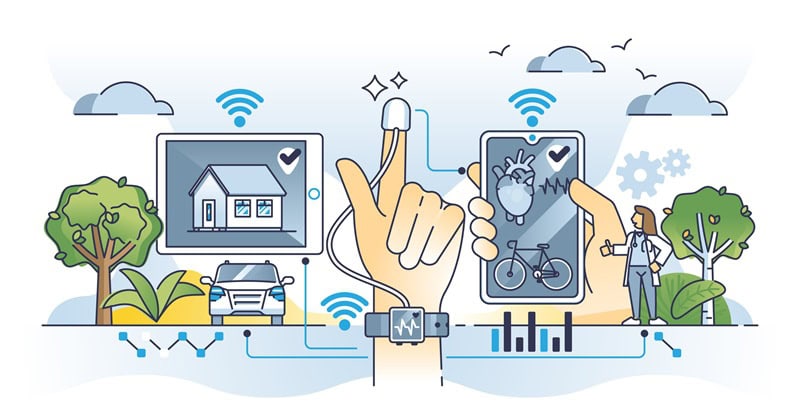
Australia’s aged care sector is currently undergoing a digital transformation, amid a demographic shift of an aging population and workforce shortages. As demand for care accelerates, providers are rethinking how technology can deliver dignified and connected models of care.

The sector is looking for continuous health and wellness monitoring, connected devices, and mobile-enabled workflows to help teams respond faster, plan more effectively, and create calmer environments for residents.
Technology is no longer just supporting care delivery, it’s helping teams move towards earlier, more informed action. In a sector where time and expertise are under increasing strain, the ability to surface risk sooner, reduce admin burden, and coordinate care seamless care, is becoming a key determinant of both clinical outcomes and organisational sustainability.
Wearable health trackers
To support continuous monitoring, aged care is embracing wearable health and wellness trackers, which are becoming a quiet engine behind improved diagnostics.
Wearable devices help aged‑care facilities balance autonomy by discreetly monitoring daily routines. Their sensors can flag changes in routine – such as sleep changes– giving carers a clearer early view of potential issues.
Rather than waiting for a fall, infection or cognitive decline to become obvious, carers can intervene earlier- often with simpler, less invasive support that preserves independence and dignity. Monitoring for early signals, like subtle reductions in mobility or disrupted sleep patterns, can prompt timely clinical review, medication adjustments, or lifestyle interventions before issues escalate into hospital admissions. This not only improves health outcomes and quality of life for residents but also reduces strain on staff and the broader healthcare system by preventing avoidable complications and enabling more personalised, responsive care.
Supporting independence
As aged‑care shifts from scheduled checks to continuous awareness, the priority is no longer just collecting data, it’s about getting the right insight to the right carer at the right moment so they can act without disrupting a resident’s independence.
Aged‑care provider BaptistCare shows how this works in practice. By equipping staff with technology that gives them real‑time access to resident information and shift‑to‑shift updates, clinicians now have clearer visibility of resident wellbeing, reduces administrative friction, and helps them escalate issues faster when something changes. It’s a straightforward example of how connected care turns passive monitoring into timely, person‑centred support.
Independence is also just as important for residents. Aged-care provider ThomasHolt is providing its residents access to connected technology. With the use of smart tablets, residents can have the availability to choose their entertainment and interact with staff as they please, making the simple things feel achievable. With the use of smart tablets, residents can order food, play games, surf the web, make calls and watch TV. This also immensely frees up carers time in helping residents with these small tasks.
Health apps are helping communication
Families and support networks play a vital role in the wellbeing of aged‑care residents, and their involvement can significantly influence care outcomes. Yet historically, facilities have had limited ways to keep families informed without increasing the administrative load on staff.
Today, digital tools such as secure mobile dashboards, resident‑monitoring platforms and integrated communication apps are helping close this gap by giving authorised family members clearer visibility into wellbeing trends and care updates.
Within this broader shift, health‑tracking ecosystems are becoming valuable inputs into aged‑care workflows. When residents use wearables or connected devices, the data captured, such as activity levels, sleep patterns or heart‑rate trends, can be surfaced through secured enterprise tools, giving carers and families a shared, real‑time understanding of wellbeing.
For example, smart insights captured through platforms like Samsung Health can be integrated into staff‑facing tools such as tablets and smartphones, on Knox‑secured Galaxy tablets or smartphonesenabling clinicians to interpret trends while families receive simplified, appropriate updates. This shared visibility helps families feel informed while ensuring carers maintain control of clinical decision‑making, strengthening communication, reducing escalations and creating a more collaborative approach to care.
This transparency aims to reduce unnecessary check‑ins, builds trust and supports more constructive conversations between families and care teams.
How AI is set to support aged care
The implementation of mobile technology across healthcare also benefits the workforce, not only the patient. As aged care becomes more connected, artificial intelligence is emerging as the next layer. Instead of staff needing to manually spot subtle changes, AI can assist in analysing patterns in the background, allowing a carer to assist when things change.
Mobile technology also creates a more complete and real-time picture of each resident’s health, bringing together data from wearables, clinical records and daily care interactions into a single, accessible view. This connected approach reduces gaps in communication and minimises the risk of critical information being missed during handovers or across care settings. By making insights more visible and easier to act on, staff can make more informed decisions with greater confidence, ultimately improving both the consistency and quality of care delivered.
This enables teams to prioritise alerts more accurately, support triage with rapid risk assessments, and coordinate care faster across hospitals, GPs and aged‑care providers – ultimately freeing up more time for meaningful human care at the bedside.