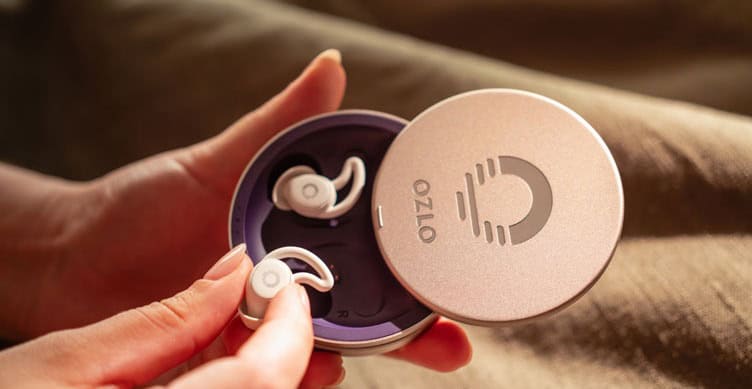
FutureNeuro, Research Ireland’s Centre for Translational Brain Science, has launched a new research collaboration with Ozlo, the company behind Ozlo Sleepbuds, wearable in-ear sleep technology designed to support more stable, uninterrupted sleep. The partnership will investigate whether this approach can help address sleep disruption in people living with epilepsy.
Epilepsy affects approximately 45,000 people in Ireland. Up to 30-40 per cent of people continue to experience seizures, despite treatment. Seizures often follow circadian rhythms and frequently occur during sleep, causing sleep disturbance and fatigue which significantly impact quality of life. Disrupted sleep further increases seizure susceptibility.
The Effect of Personalised In-ear Sleep Technology on Sleep Disturbances in Epilepsy (EPI-SLEEP) study will be led by Dr Cristina Reschke, Senior Lecturer at the Royal College of Surgeons in Ireland (RCSI) School of Pharmacy and Biomolecular Sciences, and Dr Rob Argent, Lecturer in Digital & Connected Health at the RCSI School of Pharmacy and Biomolecular Sciences.
Adults recruited
The study will recruit 60 adults with focal epilepsy and sleep disturbances, including individuals with both drug-responsive and drug-resistant forms of the condition. Participants will undergo home-based multi-modal monitoring to assess sleep and circadian patterns, followed by four weeks at-home use of the Ozlo Sleepbuds. The device combines engineered audio and adaptive noise masking to help reduce environmental disruptions and support more consistent sleep.
The study will assess changes in sleep quality, circadian rhythm stability, mood, and overall quality of life using a combination of biological tests, including saliva samples to track hormonal changes, and a watch-like device to monitor sleep-awake cycles, alongside validated participant diaries and questionnaires.
Dr Cristina Reschke said: “Many people living with epilepsy struggle not only with seizures, but with poor sleep and fatigue that affect every aspect of daily life. We know that sleep and seizure activity are closely linked, yet sleep is rarely addressed in a structured way in clinical care. Through this study, we want to better understand that relationship and explore practical, accessible ways to improve sleep, and ultimately quality of life, beyond medication alone.”
By combining FutureNeuro’s expertise in sleep and circadian neuroscience with Ozlo’s wearable technology, the study aims to generate robust evidence for a low-risk, non-pharmacological approach to improving sleep in epilepsy, without adding to medication burden.
Collaboration
“We’re excited to partner with FutureNeuro on research exploring how improving sleep may support people living with epilepsy,” said N.B. Patil, founder of Ozlo. “Ozlo was founded with a mission to help people achieve deep, restorative rest, and this collaboration reflects our commitment to advancing the science of sleep and its impact on overall well-being.”
FutureNeuro says the collaboration forms part of its broader digital health strategy, which focuses on translating neuroscience research into practical, evidence-based solutions for people living with neurological conditions. The EPI-SLEEP study has the potential to inform new approaches not only in epilepsy, but in other neurological conditions where circadian disruption plays a role in disease.