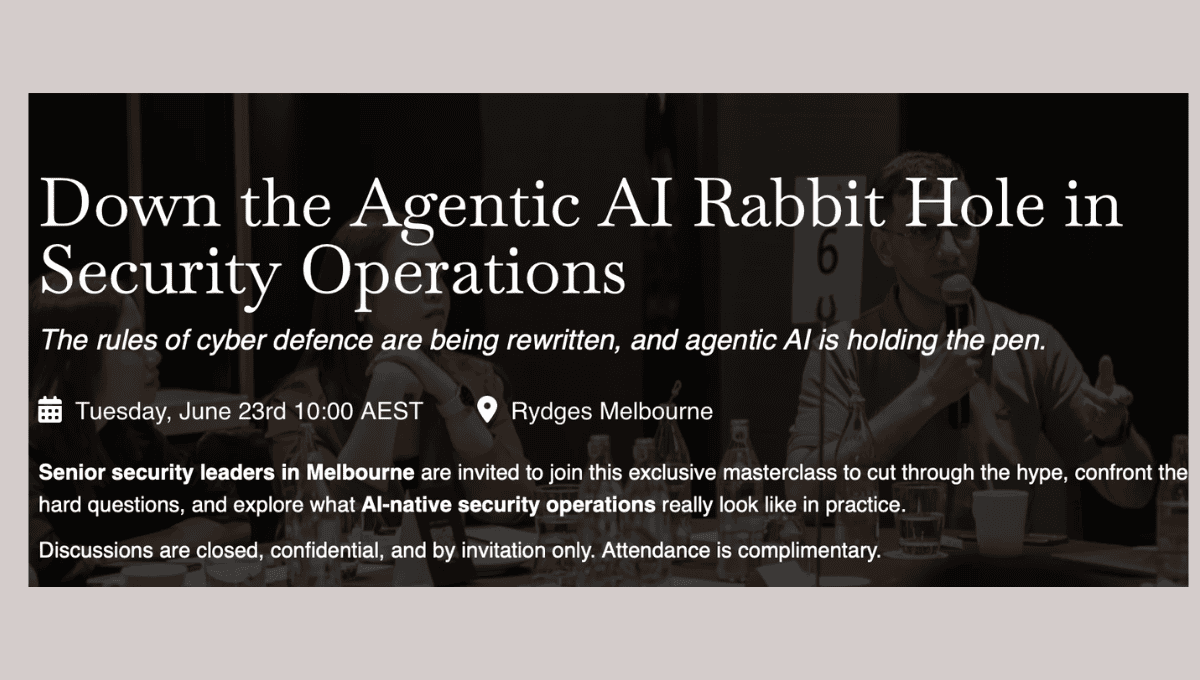
Agentic AI is reshaping security operations, but the path from promise to practice is far from clear. As organisations race to embed AI into their defences, new questions emerge around resilience, trust, and workforce impact. How do security leaders protect AI itself from being compromised, attacked, or misused? What does it really take to transform SOC performance through automation while preserving human judgement? And how do teams shift from reactive firefighting to proactive vulnerability management at scale?
Cutting through the generic AI noise, senior security leaders are rethinking what AI-native cyber defence actually looks like in practice. The focus is shifting toward tangible outcomes: adopting AI safely, strengthening security posture, and building a unified defence fit for an agentic future where attackers move faster than ever.
- Where are the biggest blind spots emerging as agentic AI enters the SOC, and how exposed are organisations to AI itself being compromised, manipulated, or weaponised against them?
- How can security leaders strike the right balance between AI-driven automation and human expertise, while using AI to move from reactive response toward proactive vulnerability and risk management?
- What does an AI-native cyber defence model look like five years from now, and how might the role of the security analyst, the shape of the SOC, and the wider definition of cyber resilience evolve along with it?