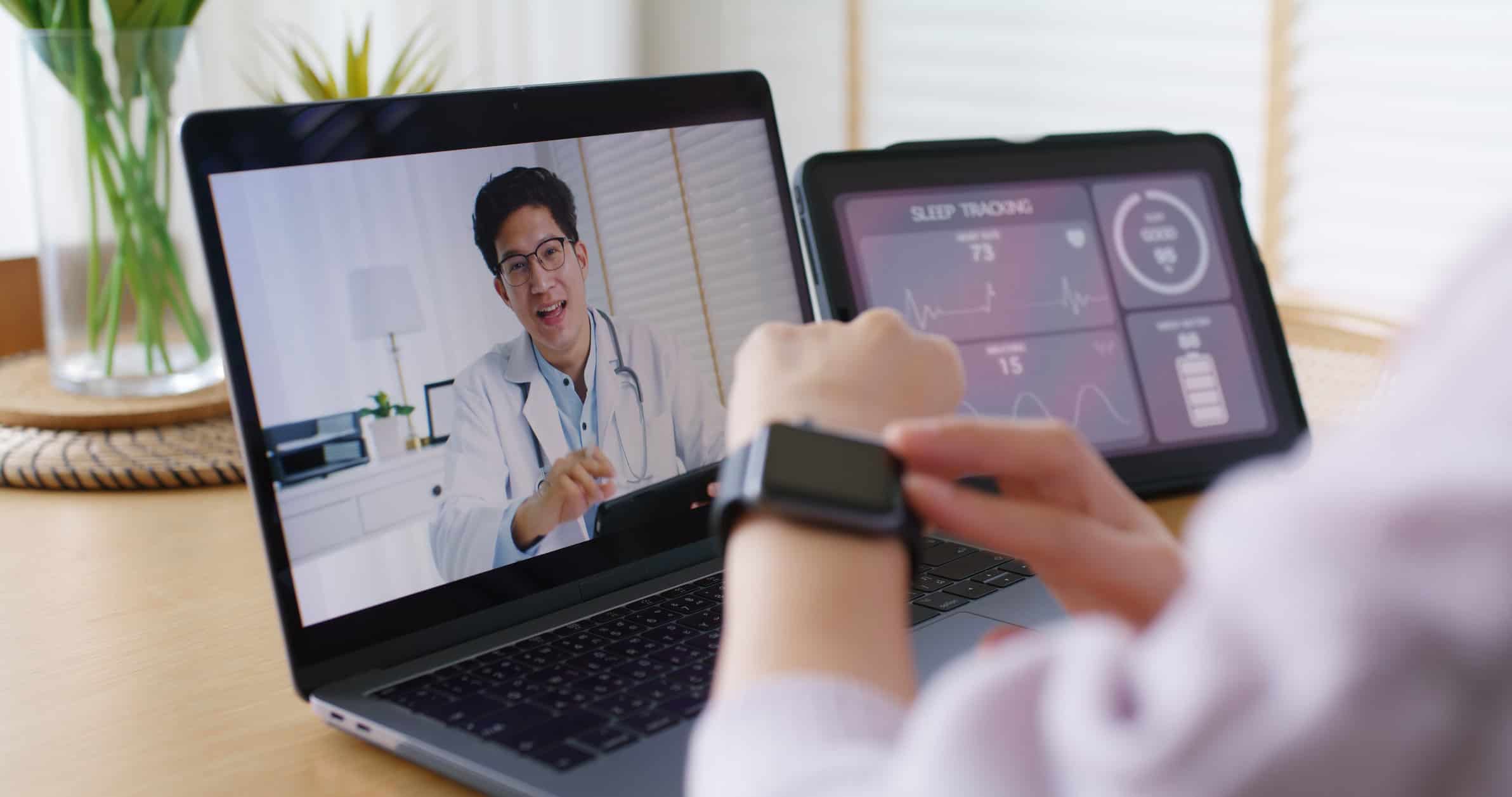
The rise of remote patient monitoring and virtual wards
Since the onset of the COVID-19 pandemic in 2020, the landscape of healthcare in the US, and indeed globally, has shifted to meet the ever-changing needs of patients and providers. Driven by technological innovation and the necessity of delivering care beyond traditional clinical settings, healthcare systems have increasingly adopted a value-based care model. With healthcare costs rising and patient expectations changing, the focus has shifted toward improving patient outcomes and ensuring quality of care.
Two innovations central to the principles of value-based care are remote patient monitoring and virtual wards. Both directly support its core principles of improving outcomes, reducing costs, and enhancing patient experience. These developments are reshaping how patients and clinicians interact by increasing efficiency and lowering expenses.
Remote patient monitoring
Remote patient monitoring collects patient data at home using connected medical devices and transmits this data back to the clinician in the hospital. Smart watches, biosensors and mobile devices now allow patients to capture symptoms and vital signs, such as heart rate and blood pressure, which can be shared with their clinician in real time.
In the US, nearly 50 million Americans use remote patient monitoring tools, and this is expected to reach 71 million users (26% of the population) by the end of 2025. As remote patient monitoring becomes more integrated, the ability to detect anomalies and predict health events is improving. Consequently, the use of these solutions will only continue to rise as clinicians are make more informed decisions and reduce those patient hospital visits. These technologies are becoming less of a choice and more of a necessity for hospital systems in the US.
Virtual wards
Remote patient monitoring enables virtual wards to work hand-in-hand with other healthcare providers integrating care, both in hospital systems and in primary care. Virtual wards leverage these remote patient monitoring and digital tools to manage patients at home, mimicking hospital-level care. These initiatives expand outpatient monitoring and promote early patient discharge, reducing inpatient bed occupancy whilst increasing patient independence and lowering costs for struggling healthcare systems facing staff shortages and facility closures.
In the US, virtual wards are used by most leading healthcare systems. In Boston, Mass General Brigham serves 80 per cent of their eligible patients using virtual wards. This has resulted in a reduction in 30-day readmission rate from 23 per cent to 7 per cent. The case for virtual wards is compelling with virtual wards reducing the number of hospital-acquired infections and have even shown reductions in mortality rates.
Challenges
Whilst the adoption of remote patient monitoring and virtual wards has been rapid, there are still a number of challenges that face hospital systems as they integrate these solutions. Patient provided data can be inaccurate when self-reported, leading to an inaccurate digital health pool and a noisy electronic health record (EHR). In addition, adoption is slower in rural or low-income regions due to lack of device availability, causing geographical and socioeconomic inequity. Finally, whilst Medicaid supports and spends significant funding on these solutions, the ability to gain commercial coverage is inconsistent which limits the rate by which remote patient monitoring tools can be adopted.
The benefits cannot, however, be understated. Improved patient outcomes combined with lower costs have made remote patient monitoring and virtual wards the focus for value-based care models.
Opportunities
The rapid growth of remote patient monitoring and virtual wards offer a significant opportunity for Irish digital health innovators. Irish companies, such as Oneview, who are partnered with Baxter, are leveraging the increased spending on digital care coordination platforms and connected health technologies to engage with US health systems. With strengths in medical device and connected health technologies, Irish innovations are well positioned to address the needs of these organisations and gain access to the world’s largest healthcare market.
The future of US healthcare
As the focus of value-based care becomes more central to the delivery of US hospital care, these new, digitally defined strategies will continue to expand.
As a result, there is a huge opportunity for further innovation and product development within this sector.
Despite the number of players within this space, all parties are pushing in the same direction.
Patients continue to seek the independence that remote care enables, and healthcare providers want to continue to reduce costs and improve efficiencies of inpatient care.
As such, it is clear to see that the future of healthcare may not be in the hospital, but rather in the home.
Emily Fulton is the Trade Development Executive for Digital Health at Enterprise Ireland Boston.