
GigaTIME, a new AI-powered pathology model, can analyse tumour microenvironments to help reveal how individual immune cells interact with tumours.
A recent joint study from Providence Genomics, Microsoft Research and the University of Washington revealed the breakthrough that can potentially unlock improved treatment response for millions of patients who receive targeted immunotherapies for cancer.
The GigaTIME study is published in Cell, a leading medical journal.
“GigaTIME is about unlocking insights that were previously out of reach,” Carlo Bifulco, MD, chief medical officer of Providence Genomics and medical director of cancer genomics and precision oncology at the Providence Cancer Institute said.
“By analysing the tumour microenvironment of thousands of patients, GigaTIME has the potential to accelerate discoveries that will shape the future of precision oncology and improve patient outcomes.”
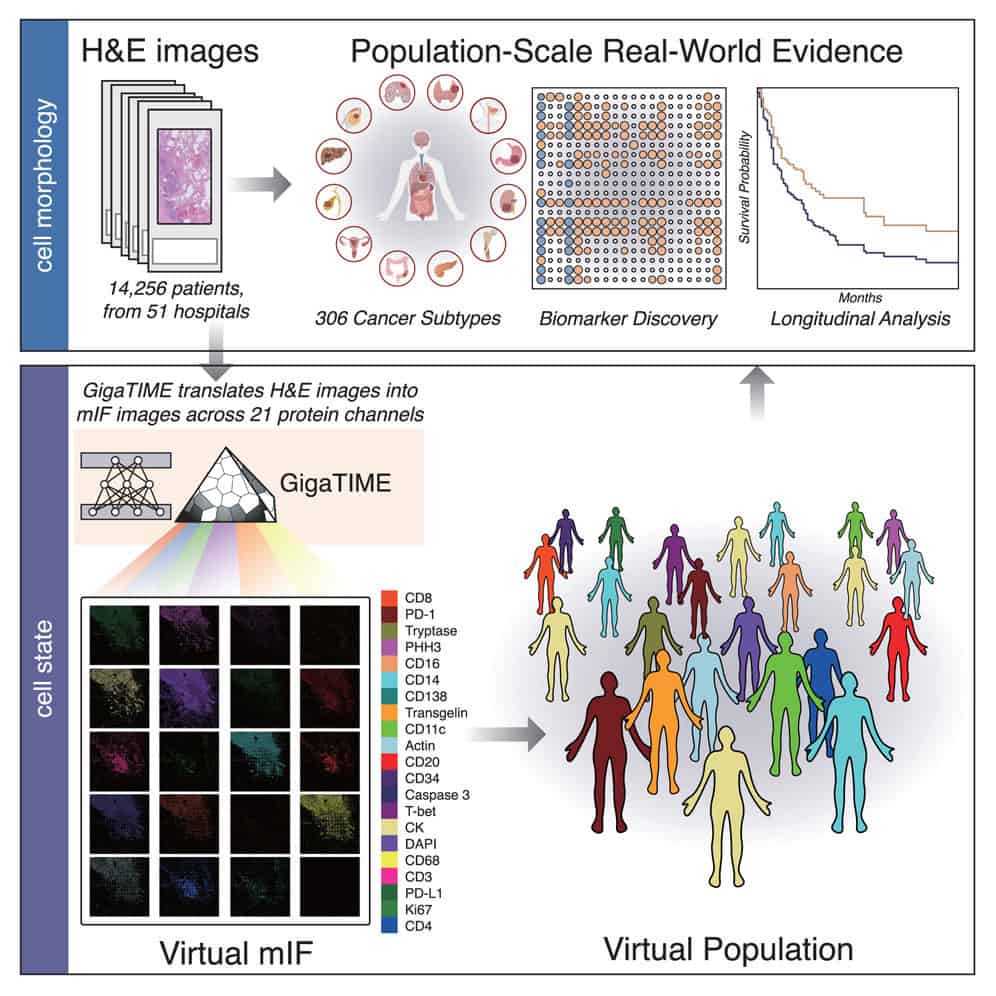
The team built the GigaTIME model using multiplex immunofluorescence (mIF), a leading-edge imaging technology that can positively identify tumour and different immune cell types in a tissue biopsy.
mIF is currently low-throughput and costly, so the team used mIF to train GigaTIME to generate accurate virtual mIF images from standard histopathology slides, which are produced for any tissue biopsy reviewed by pathologists.
GigaTIME was then used to create a total of about 300,000 virtual mIF images from these patients, spanning 24 cancer types and 306 cancer subtypes, to find more than 1,200 statistically significant associations in mIF proteins with key factors including biomarkers, staging and patient survival.
Key applications of GigaTIME include helping to efficiently assess tumor-immune interactions, predict immunotherapy response, and identify mechanisms of immune evasion that inform strategies to overcome resistance.
“GigaTIME is a testament to what’s possible when cutting-edge AI meets real-world clinical data at scale,” Hoifung Poon, General Manager of Real-World Evidence, Microsoft Redmond said.
“By working closely with Providence and University of Washington, we’ve shown how multimodal AI can turn routine pathology slides into rich, spatial proteomics—unlocking discoveries that were once out of reach. Our hope is that by making GigaTIME openly available, we can accelerate research and help the entire field move toward more precise, personalised cancer care.”
The GigaTIME model is publicly available at Microsoft Foundry Labs and on Hugging Face to help accelerate clinical research in precision oncology.