


Australian biotechnology technology company Oktopi has launched an AI-enabled drug development platform designed to give smaller biotechnology companies access to the expertise and decision-making capabilities traditionally available within major pharmaceutical companies.
Founded 18 months ago by husband and wife team Craig and Michelle Rayner, the company has secured funding from the Gates Foundation, Amazon Web Services (AWS) and Medicines for Malaria Venture and has attracted customers in Australia, Europe and the United States since launching its software platform in May.
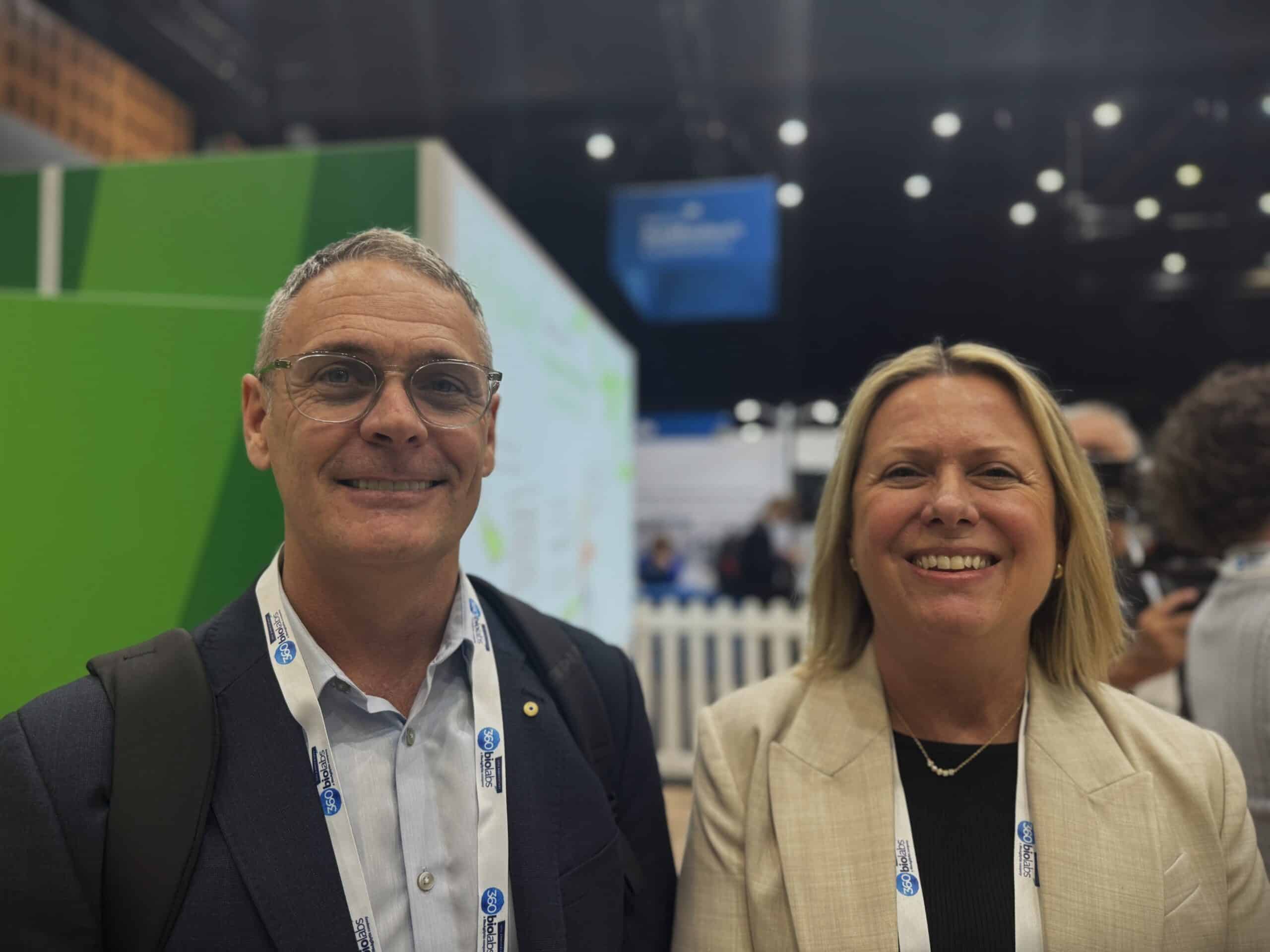
Speaking to Pulse+IT at the AusBiotech conference on the Gold Coast, Oktopi co-founder Craig Rayner said the company was established to “democratise medicine development” by making the capabilities of large pharmaceutical companies accessible to smaller biotechnology businesses.
Dr Rayner, who has previously worked in medicine development at Roche and Moderna, said smaller companies often lacked the cross-functional expertise needed to navigate the complex development and regulatory processes involved in bringing new medicines to market.
“We saw an opportunity to take the capabilities that exist within the four walls of large pharmaceutical companies and make those available to the smallest biotechs. In doing so, the intention is that smaller teams will be able to move medicines closer to the patient.
“Everyone benefits – biotechs benefit, big pharma benefits, because there’s more substrate, but ultimately patients benefit.”
Oktopi’s software-as-a-service platform draws on the experience of pharmaceutical industry experts to codify the critical questions and decision-making processes involved in medicine development, from early research through to later development stages.
Dr Rayner said the company had effectively created a pharmaceutical development “how-to,” incorporating the questions typically asked by large, cross-functional development committees when assessing whether to advance a new medicine.
“We’ve got all of the critical questions that large cross-functional teams will ask of any modality – a small molecule or a biologic – when they’re sitting on a development committee to determine whether they move it forward.
“And by making that accessible to people, they start to know what they need to ask and that’s the biggest challenge with smaller biotechs, not knowing what to ask.”
The platform combines structured knowledge with workflows for building target product profiles and development plans, alongside AI tools that can draw on regulatory guidance, publicly available information and company-specific data.
Built on AWS Bedrock, the system provides companies with their own secure environments, including separate project spaces, data rooms and document repositories.
One of its capabilities is an AI-powered development committee that can review documents against the platform’s structured decision-making framework.
Dr Rayner said one customer had reported significant savings from using the technology.
“One of the comments that’s come back from our users is, ‘Oktopi, you have saved us a month of work, $100,000 in consulting costs and it took 10 minutes.’
“So we’ve got those proof points in economic time saved, increased productivity but most importantly quality.”
He said a key distinction between Oktopi and general-purpose generative AI tools was its emphasis on decision architecture, with traceable references and human accountability throughout the development process.
“In this whole choppy ocean of AI, everyone’s using Claude and so on, we believe that we’ve got that one part of stillness in that area and that’s decision architecture.
“So what it means is that when people use our platform, they can trust the outputs that are coming on it because everything has been signed off at every granular level all the way through and you have human accountability throughout the entire stack.”
The company is also engaging with regulators interested in how AI-generated information can be assessed and governed in pharmaceutical development.
Dr Rayner said regulators were increasingly dealing with AI-generated submissions and information, creating interest in systems that could provide more transparent decision-making and accountability.
“Use the AI for its full potential but at the same time keep human accountability at the right place in a highly regulated patient-centric environment.”
Australian biotechnology companies using the platform include AdAlta, which is applying it to CAR T-cell therapy and nanobody programs, and Prescient Therapeutics, which is using it for small molecule development.
Other customers and collaborators include Medicines Development for Global Health, which brought moxidectin through US Food and Drug Administration approval and Molecules to Medicine, which operates in Australia and the UK.
Dr Rayner said Oktopi also had a presence in Europe and the United States as well as Australia.
The company’s HQ is in Melbourne, with its tech-engineering team in Brisbane and team members and collaborators in Switzerland and the United States.
Its chief technology officer Colin McCririck previously held senior technology roles including at Queensland Health and Midnight Health.
Dr Rayner said the broader team brought together experienced pharmaceutical development specialists, including former executives from Roche, Sandoz and Eli Lilly, several of whom had worked together previously.
The company’s initial development was supported by the Gates Foundation, with subsequent funding from the foundation, AWS and Medicines for Malaria Venture. It also established collaborations with international organisations including Medicines for Malaria Venture and the Drugs for Neglected Diseases initiative.
Dr Rayner said the longer-term ambition was to allow smaller biotechnology companies to progress medicines further through development before seeking partnerships with major pharmaceutical companies, potentially changing the point at which promising treatments were licensed or acquired.
“From my perspective, we are most enthusiastic about seeing this as democratising medicine development. If done well, it could really transform how far the small biotechs will take things and where they consider a handoff to big pharma, if at all. And most importantly, I think it will increase the availability of medicines for high unmet need.”


