
New Zealand’s Minister of Health may have left the best for last in announcing a new long-term direction for digital health as the year came to a close – but for most of 2025 Health NZ faced ongoing pressure as it maintained ageing digital health systems and made incremental progress on national programmes.
Health Minister Simeon Brown’s launch of the Health Digital Investment Plan (HDIP) at Digital Health Week in Christchurch in November had been long-awaited by the sector, having originally been slated for release by the end of 2024.
The uncosted plan would see the establishment of a Centre for Digital Modernisation of Health and would aim to improve outcomes for patients and families, support clinicians, stabilise critical infrastructure, build foundations for innovation and enable data-driven decision-making.
The plan indicated future projects would include a single Electronic Medical Record system across the health sector, funding for remote patient monitoring to support earlier discharge, a national radiology system to prioritise urgent cases and stronger cybersecurity to protect patient information.
LANDMARK MOMENT
Health NZ leaders welcomed the Plan’s release, with chair Lester Levy saying the plan offered a “real opportunity,” but warning “the idea and the funding isn’t going to make a successful implementation.”
Dr Levy said the plan was a “landmark” moment for a system facing a “massive” technical and data deficit.
“Possibly for the first time we’ve got a real integrated opportunity to actually resolve a very significant technical deficit,” Dr Levy said, adding that the plan was “bold, audacious in many ways and a fantastic opportunity – and a real challenge – because what was spoken about yesterday is about intent.”
Dr Levy noted the plan would still require valid business cases, with a series of future procurement opportunities listed on the government tender website GETS.
“We’ve got the idea – we now have to demonstrate that we’ve got the capacity to successfully implement this. So we need to be persuasive and convincing in order to get the funding.”
The HDIP launch came months after the release of an earlier planning document – the national health plan, which referenced digital priorities but did not provide detailed implementation pathways.
At the time, that plan was criticised by Auditor-General John Ryan who said ““I expected the plan to be based on clear and reasonable assumptions about health needs and the expected quantity of service demand, the resources needed to provide those services and the forecast cost of those resources,” however, he said “the plan does not do this.”

Elsewhere in the year, New Zealand’s health technology sector was valued at more than $3.7 billion and growing annually, according to Minister for Mental Health Matt Doocey – who led New Zealand’s delegation to this year’s Digital Health Festival in Melbourne.
He said the $3.7 billion figure came from New Zealand Trade and Enterprise figures – with the sector “growing at a rate of over 8 per cent year on year,” with the Minister adding that “there’s no reason why we can’t go faster and further.”
HEALTH X + BUDGET
Another major development in 2025 saw Health NZ establish its HealthX team, aimed at fast-tracking digital innovations across the country’s health sector.

HealthX director of digital innovation and AI Sonny Taite told Pulse+IT his team had also set themselves the “additional challenge” of delivering monthly innovation initiatives leading up to January 2026.
“We’re off to a flying start – we’re setting that cadence and pushing ourselves to get there by January. It’s already building real momentum,” Mr Taite said.
Earlier in the year, the Government’s budget came in for criticism from Digital Health Association CEO Ryl Jensen, who described the 2025 Budget as a “missed opportunity” for significant investment in digital health.
Ms Jensen said the Budget offered “small steps but falls short of delivering the bold, strategic investment needed to modernise New Zealand’s health system and unlock the full potential of digital innovation.”
Ms Jensen welcomed targeted funding for 24/7 telehealth services, mental health response tools, upgrades to PHARMAC’s digital systems and digital infrastructure for the new Dunedin Hospital – but said these initiatives remained isolated.
“What’s still missing is a joined-up, long-term digital health investment strategy that connects the dots across the system and funding that is sustained,” Ms Jensen said.
“Digital health is no longer a future aspiration – it’s the foundation of modern care. We’re encouraged by some of the budget commitments, but now is the time to be bold. Our health system is at a crossroad – we can either keep making incremental, patchwork changes or take a decisive step toward a connected, responsive health future.”
Late in the year, Minister Simeon Brown issued a new Letter of Expectations to the Chair of the Health New Zealand Board, setting out the Government’s priorities for the rest of this financial year and into 2025/26 – including expectations about digital services delivery.
COMPLEX & FRAGILE
Throughout 2025, operational capacity remained a recurring theme for Health NZ, as summarised in its 2024/25 annual report, which was published late in the year.
In the report, Health NZ acknowledged the health system’s digital environment was “complex, fragmented and fragile.”
The report noted a need to maintain critical digital services while longer-term modernisation work takes place.
Meanwhile, the Shared Digital Health Record (SDHR) programme continued to progress during the year following a number of delays to its official launch date.
The programme is being developed in phases, with early adopter activity underway and the national launch rescheduled to mid-2026 – with the goal of allowing patients to control whether their information is included and for general practices able to opt-in.
The project completed general practice focus groups and patient interviews across the country, aimed at helping the health agency to “better understand” what support GPs and patients will need in mid-2026 when the service is expected to be implemented.
Following feedback, Health NZ noted overall, general practice participants and patient interviewees “could see the value Shared Digital Health Record will bring, with patients surprised that their health information is not already available nationwide.”
VIRTUAL CARE + SCRIBES
Other developments in New Zealand’s digital health service delivery included the introduction of a national 24/7 digital-health service, offering virtual access to clinicians and aimed at expanding availability of primary care outside standard hours.
Eight providers were initially contracted by Health New Zealand to provide the service, including: Bettr Online; CareHQ; Emergency Consult; The Doctors Online; MedOnline; Pocket Lab; Tend; Practice Plus.
Elsewhere, survey results showed continued uptake of AI-enabled tools in the private health sector, particularly for administrative tasks.
The 2025 BNZ Healthcare survey of private health providers found that two-thirds had used or considered AI tools, with note-taking AI scribes the most common. However, clinical tools such as imaging and diagnostic applications were widely still in discovery or pilot stages.
More than 40 per cent of respondents reported using or trialling scribes, with nearly half of those already at partial or full deployment.
Administrative automation tools, such as scheduling, billing and payroll were also popular, with a quarter of those surveyed using or considering using them – with 36 per cent already in the adoption phase.
VENDORS
In vendor news, the sale of Orion Health to Canadian company HEALWELL AI was finalised in April, with Orion CEO Brad Porter telling Pulse+IT that combining Orion’s health data infrastructure with HEALWELL’s clinical-grade AI had allowed both entities to roll out advanced, interoperable digital health solutions starting with active pilots across Canada and expanding into key markets including the UK, US, Middle East, Australia, and New Zealand.

In June, the 25th anniversary of New Zealand’s Healthline was marked by a parliamentary breakfast, where Whakarongorau – which runs Healthline – announced new capabilities for Healthline nurses and paramedics to book that GP appointment for callers.
Whakarongorau expected the booking service to boost access to timely healthcare, improve health outcomes and reduce pressure on emergency departments.
Valentia Technologies CEO Dr Ahmed Javad said his company had developed the platform in collaboration with Whakarongorau “as a sector-strengthening initiative, backed by significant investment to give back to the health and social care ecosystem.”
Later in the year, it was announced that Whakarongorau Telehealth Services NZ would receive funding for the development of a new mental health AI navigation platform, aimed at helping New Zealanders find support.
Earlier, Tend Health was announced as the ninth and final recipient from the first round of the Government’s Mental Health and Addiction Community Sector Innovation Fund.
Minister for Mental Health Matt Doocey said Tend Health would use the funding to set up a new digital primary mental health and addiction service, with the initiative receiving $1.97 million of Government funding over two years. This would be matched dollar-for-dollar by Tend to bring the total funding pool to just under $4 million.
Mr Doocey said he was proud that funding from round one had enabled eight other organisations to start delivering new and expanded initiatives.
Those organisations include MATES in Construction, the Mental Health Foundation, Youthline, Wellington City Mission, Rotorua Community Youth Centre Trust, the Sir John Kirwan Foundation, Women’s Refuge, and Just a Thought.

Meanwhile, in the spirit of trans-tasman collaboration, Australian-founded AI scribe Heidi was rolled out to all Health NZ emergency departments in 2025, with the goal of alleviating administrative burdens for ED teams and improving patient care across the country.
The nationwide roll out followed earlier trials that found Heidi reduced average documentation time from around 17 minutes to just over four minutes per patient while reducing after-shift administrative work by up to 81 per cent.
Earlier, Heidi had joined iMedX as the two ambient medical scribes initially endorsed by Health New Zealand for trialling within public health services across the country.
Since then, NAIAEAG has also endorsed the following IntelliTek and T-Pro for use within Health NZ – subject to completion of all privacy, security and contractual processes. A number of other Ambient AI Scribe tools remain under review.
Addressing demand for sovereign data storage in healthcare, Oracle’s regional managing director for Australia and New Zealand Stephen Bovis told Pulse+IT the combination of Oracle’s AI-ready database and the OCI Dedicated Region model would allow regulated industries and government agencies to utilise the latest product offerings while ensuring data remained secure and stored locally.
“I think that’s particularly important for the ANZ market,” Mr Bovis said, adding that “customers are looking to manage mission-critical data and do AI modelling in a secure way, ideally on their own premises. Now we’ve got an offering that allows exactly that.”
Mr Bovis added that Oracle had demonstrated it was “very well advanced in terms of our overall healthcare offering” and was keen to expand its reach across the Australia – New Zealand market.
NEW FACES
2025 also saw a number of key changes for the country’s digital health peak bodies, with Digital Health Association Ryl Jensen leaving to join Health NZ, replaced by Stella Ward – and leadership changes also for Health Informatics New Zealand, with Alex Kemp appointed as new CEO to replace Scott Arroll.
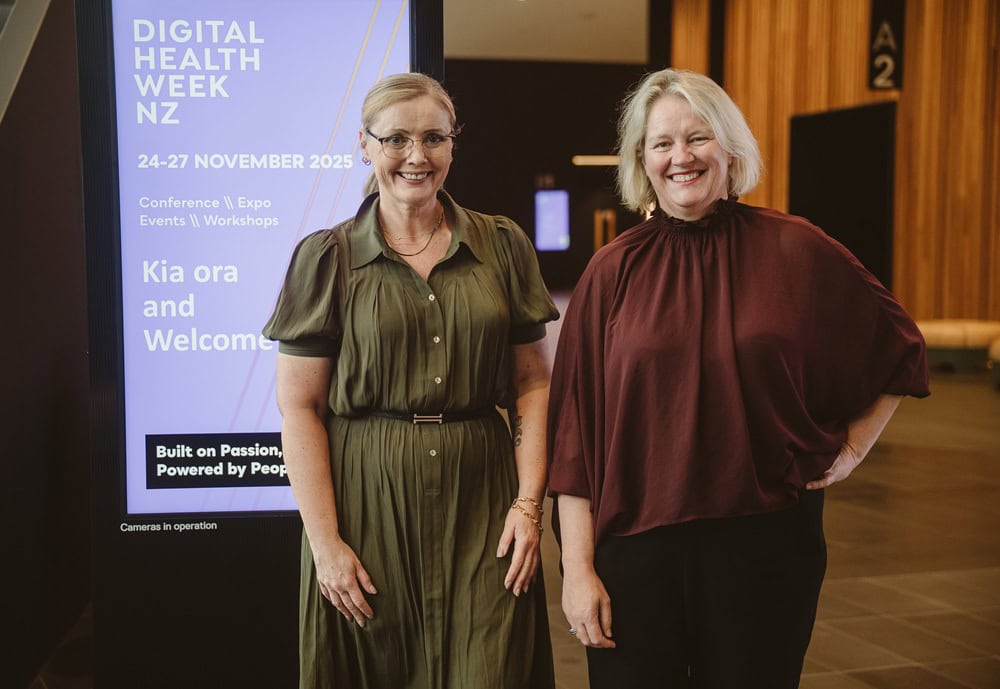
Ms Ward said she was “energised by the opportunity to lead the DHA during a pivotal time for New Zealand’s digital and data ecosystem,” while Ms Kemp said she would “continue to prioritise delivering value to members and strengthening partnerships across the digital health, disability, and social sectors.”
The two organisations rounded off the year by signing a Memorandum of Understanding to formalise their partnership in advancing digital health and health informatics across New Zealand.
The partnership would focus on three key areas: joint development and delivery of events and conferences related to digital health and health informatics; sharing of information, resources, and expertise to strengthen both organisations and their members; and exploration of joint opportunities that benefit the broader sector.
Looking ahead to 2026, Pulse+IT expects continued focus on early delivery of the Health Digital Investment Plan – with all eyes watching its first major procurement rounds – as well ongoing pilot-stage testing of the Shared Digital Health Record ahead of its scheduled mid-year nation-wide launch.
Meanwhile, the Budget in May will perhaps provide the clearest indication of whether the Government’s ambitious plans for digital health are matched by its willingness to adequately fund them.
*Note to our readers: With the wealth of innovation and development across the digital health ecosystem, our year-in-review articles are highly curated and written to reflect some of the key themes and milestones for the year and are not intended to be a comprehensive summary.