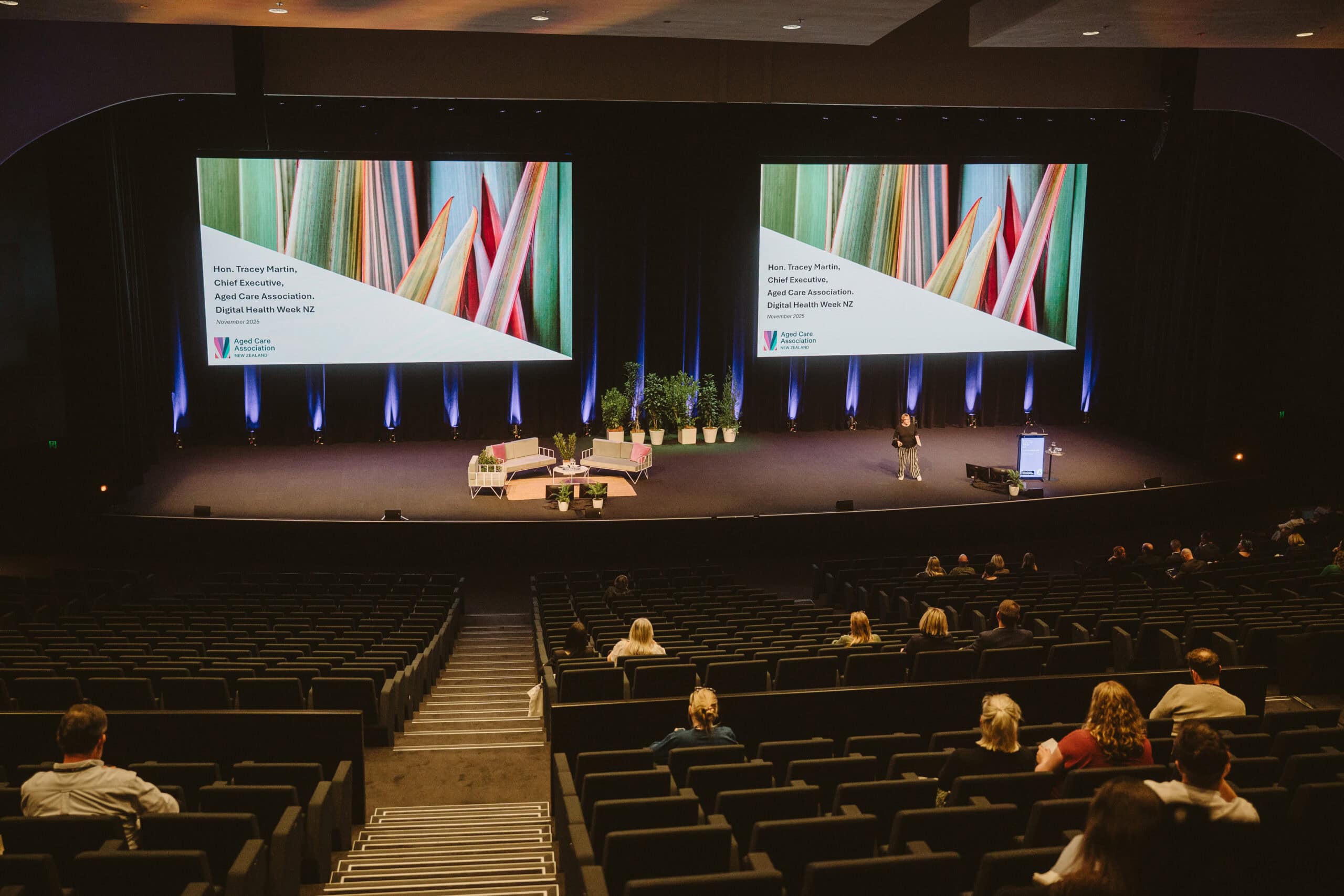
Technology could play a critical role in alleviating New Zealand’s aged residential care workforce pressures, according to Aged Care Association chief executive Tracey Martin.
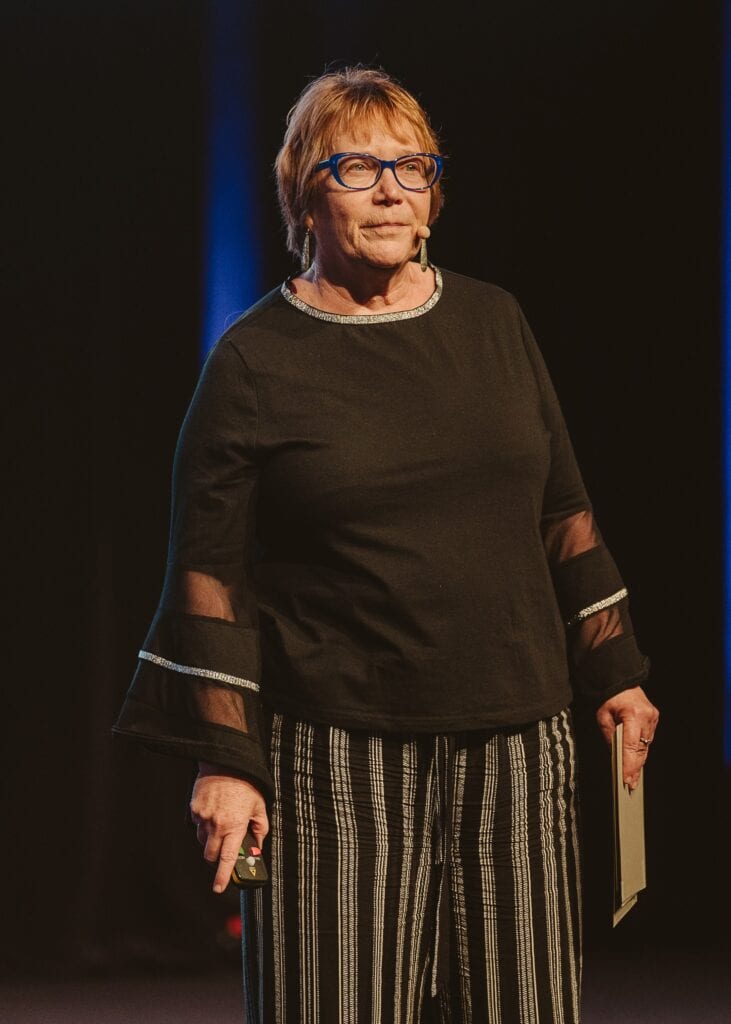
Speaking at Digital Health Week in Christchurch, Ms Martin said with demand for aged care increasing combined with growing workforce shortages, digital tools should aim to free up staff time, support increased human care and enable new models of clinical oversight.
Ms Martin told the audience that residential aged care sits at the “intersection” of major national pressures including “demographics, workforce, health system pressure, digital disruption, innovation and expectation.”
She said for the aged care sector, a key question was ‘where does technology fit inside this environment’ and suggested that digital solutions should be designed to help aged care workers do their jobs more effectively, rather than replacing them.
Ms Martin said technology should not prioritise monitoring for regulators over supporting frontline work.
“Technology or digital advancement is created around how can we count – how many times the bell is pushed, how can we count how many minutes it takes to get that person to get there, what can we count next – but who are we counting for? None of that counting is going to get that person to the toilet faster.”
Ms Martin insisted “no technological device will replace care, no digital solution will replace human beings to deliver care.”
She suggested instead, technology should be designed to improve workforce capacity.
“I would urge people to work really hard to create technological solutions that don’t try to save money by replacing a human being with a robot, but that they create digital solutions that release human beings to be more human. Because that appears to be the gap that we have at the moment.”
She pointed to technology that reduces clinical administration as an example – where AI-assisted wound care meant a staff member could photograph a wound and have AI generate appropriate documentation, ultimately freeing up the registered nurse’s (RN) time.
“The RN now can just read through it – make sure that the AI actually knows what it’s talking about – that piece of paperwork is done, that’s fantastic and the RN can move on.”
However, Ms Martin warned against digital tools that reduced human interaction with clients.
Giving the example of robotic companions for people with dementia – in this case a robotic seal – she said while they may give elderly residents comfort, that was not the same as human interaction.
“We must not lose sight of the incredibly negative impact of isolation and loneliness – and giving people a robotic seal doesn’t change that.”
She said virtual care was one area “we should do more of,” citing Waikato’s COVID-era virtual RN programme as an example of digital technology directly easing workforce pressure.
In this model, a “proactive, awake, human RN at Waikato Hospital” supported health care assistants in real time across ten rural and charitable facilities.
She said the results showed the potential of digital tools to assist frontline teams.
“Over 11,000 calls, not one complaint. Hospital transfers dropped below 1 per cent, services stayed open instead of closing beds, healthcare assistants were supported, clinical safety improved and manager stress plummeted.”’
However, Ms Martin said despite that programme’s success, it was stopped – due to what she labelled a “gap between promise and reality.”
“So why did it stop? Not because the model failed, not because the residents were unsafe, but because the Agency for Healthcare Research and Quality agreement and HealthCERT rules didn’t allow it to continue. The COVID waiver expired and with it, so did that innovation.”
Ms Martin referred back to earlier in her speech, when she claimed a lack of clarity over where aged residential care sat in New Zealand’s health environment was a key factor shaping how innovators and policymakers approached the sector.
“Is residential care considered primary care in New Zealand? No it’s not. Is residential care considered acute care in New Zealand? No it’s not. Is residential care considered community care in New Zealand? No, it’s not. Is residential care considered secondary care in New Zealand? Not technically.
“So, where does residential care sit when you are thinking about what you are designing? Where are the 25 per cent to 28 per cent of over 85 year olds that are in residential care, where are they in your thinking about what you design?”
Ms Martin told Digital Health Week attendees “this is the gap that we need to sort out.”
“We need you to know who we truly are, where we are, what we need, who we serve. And we need you to partner with us to remind the government that they need to be providing for their citizens who are inside those care facilities in the same way that they provide for everybody else.”