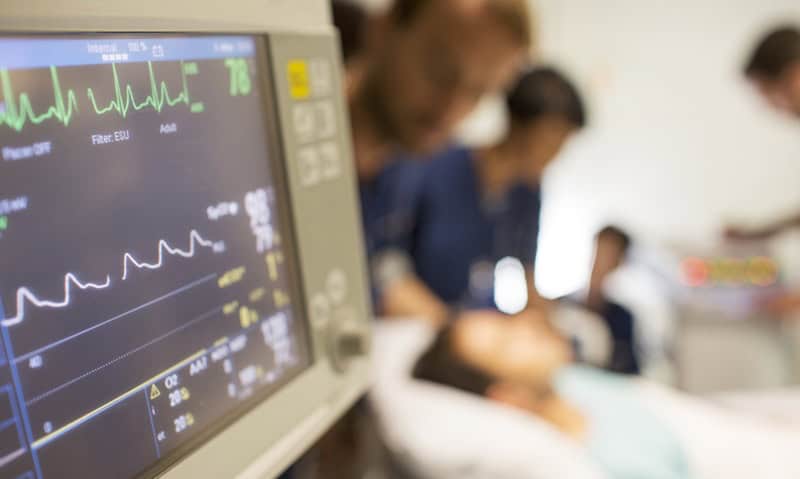
Tallaght University Hospital (TUH) has launched a novel virtual ICU tour which aims to demystify the critical care environment for patients and their families, thereby reducing fear or anxiety.
Many patients treated in an intensive care unit (ICU) experience psychological repercussions, including depression, anxiety and post-traumatic stress disorder (PTSD). Patients often report limited or fragmented memories of their time in critical care, with many experiencing distressing hallucinations or delusions due to delirium, which affects up to 80 per cent of ICU patients globally.
Dr Melanie Ryberg, Clinical Psychologist at TUH, said: “For many ICU survivors, the experience of recovery is not just physically challenging, it is often psychologically overwhelming, with recovery continuing far beyond discharge home. While some patients have no memory of their time in ICU, others remember aspects of their experience, but can have difficulty making sense of those memories. Many patients will remember strange and sometimes very frightening experiences, which often arise as part of delirium, which is very common in ICU.”
“This virtual tour offers a safe and supported way to revisit the ICU (Intensive Care Unit) environment, helping patients make sense of what happened as they continue their recovery journey,” Dr Ryberg said.
The initiative, funded by the Adelaide Health Foundation, is part of the hospital’s strategy to explore innovative ways of enhancing recovery and wellbeing. The Virtual ICU Tour, now available on the TUH YouTube channel, offers a guided walkthrough of the unit led by ICU staff. It explains the sights, sounds, and sensations patients may have encountered, helping to bridge gaps in memory, and aid recovery.
Niamh Gavin, CEO of the Adelaide Health Foundation, said the charity is delighted to fund this project. “The Virtual ICU Tour exemplifies the kind of compassionate, forward-thinking care we strive to support, one that recognises the emotional and psychological needs of patients and families, not just the clinical ones. It is a powerful example of how TUH is delivering on its strategic vision.”
Commenting on the new initiative, Barbara Egan, ICU survivor and Founder of ICUsteps Dublin, said: “The ICU environment is very overwhelming, with machines, noise, bright lights, and continuous activity. This tour of ICU created by TUH is a valuable resource, initially for family members whose loved one is in ICU. When a family member understands the reasons for the life-sustaining machines and the various sounds, this can reduce their feelings of helplessness. They can in turn can use this knowledge to ease their loved one’s fear and confusion.”
“When a former ICU patient is ready to view this video I believe it will really help them make sense of what they have been through and potentially, in time, enable them to integrate their ICU stay into their lives. Knowing what to expect after critical illness and where to turn to for further support gives the person some control in their recovery,” she said.