FHIR and SNOMED are the “rocket fuel for AI,” CSIRO’s interoperability leader Kate Ebrill said this month at a Dedalus-supported webinar which explored how global standards are transforming connected healthcare.
FHIR (Fast Healthcare Interoperability Resources) and SNOMED CT are the backbone of digital health standards and the foundation for connected healthcare, the webinar heard.
“Unless we get a good set of clean, quality data, we are not necessarily going to have the quality AI tools that we want,” she said. “If we want ethical AI in Australia, it must be built on data that represents the diversity of our population. We must build up sovereign AI capability. These standards give us the structure and the ground truth to do that.”
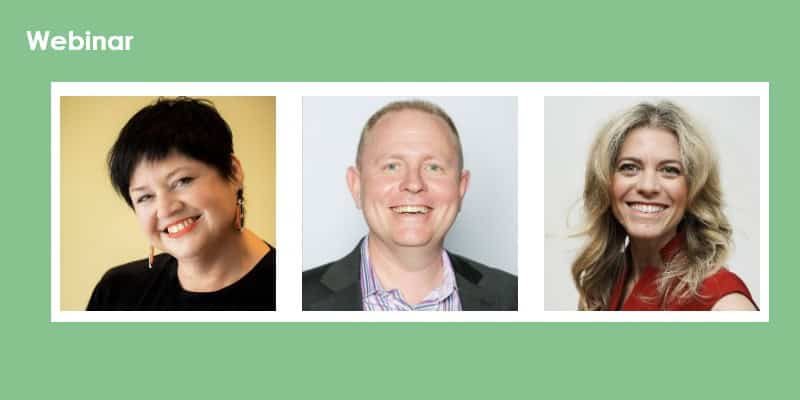
Ms Ebrill, Product and Programme Lead for Clinical Terminology and FHIR Products at CSIRO’s Australian e-Health Research Centre (AEHRC) took part in a panel discussion with Dedalus solution architect Chris Royle and facilitator and digital health advisor Dr Louise Schaper.
Mr Royle added: “Clinicians and patients need to trust the information they’re getting back. If AI is trained on overseas data, it might not be appropriate here. Once trust is there, AI can really support care and streamline workflow.”
VALUE PROPOSITION OF INTEROPERABILITY
Dr Schaper raised for discussion the “substantial evolution in connected care”.
“Not so long ago, we used to talk about healthcare interoperability in technical terms, and now we’ve really evolved our language so the value proposition of interoperability is literally embedded in connected care,” she said.
Chris Royle traced that evolution from isolated hospital systems to open, data-driven models that now include patients as active participants.
“When we look at HL7 and the way it has progressed over the last 50 years, it was mostly around sharing information between a couple of systems within the walls of a hospital. Point A to point B,” he said.
“The standards and their evolution are allowing patients to participate more in their care. They’re no longer visitors to their information, they’re active participants,” Mr Royle said.
CHANGING EXPECTATIONS
Kate Ebrill said she believed the biggest evolution had been in trust.
“There’s an increased trust by both clinicians and consumers in the data, and the need for sharing. I think the biggest change has been the introduction of smartphones. Our existing My Health Record was designed and built before smartphones existed,” she said.
“There’s expectation from consumers that they should have the information they need at their hands in healthcare.
“We’ve got it in every other aspect of life. So why should not we have it in healthcare as well? And for clinicians, why shouldn’t they have the information they need in the way that they need it in the easiest possible way? Because we have that in the rest of our life.
“So I think that has really changed, that expectation, that requirement around what healthcare should be delivering to empower both the consumers and the clinicians,” Ms Ebrill said.
Standards working together
Mr Royle said standards combine to ensure information can be shared safely and meaningfully.
“We can define that a particular element is based on a SNOMED code set,” he said. “That way, when we share that information, the recipient knows exactly what it is. It’s human-readable, but importantly, it’s computable.”
Kate Ebrill added FHIR is a global standard that creates opportunities for both multinational and local innovators. “By adopting these standards in Australia, you’re not only supporting connected care within Australia but can also market your products overseas,” she said. “FHIR doesn’t work without SNOMED, and SNOMED works best with FHIR – they’re hand in hand.”
She stressed that collaboration and governance would underpin the success of standards so they became “seamless” for clinicians. “The right thing to do should always be the easiest thing to do,” she said. “It’s a team sport – government, industry, clinicians, consumers and researchers all have a role.”
The SPARKED initiative brings those groups together.
“We take international specs and localise them for use in Australia,” she said. “But we do need to localise them for use within Australia and make sure we’ve got the right Australian healthcare identifiers. It has to deliver immediate benefit and align with policy.”
“And it’s actually about coming together and agreeing those set of specifications. Because we need to make sure we are consumer focused,” Ms Ebrill said.
“We need to make sure that we are only looking at implementing and specifying the data that is the most important for clinicians to record.”
She said the Australian Digital Health Agency was doing “a lot of great work around building the standards into the national infrastructure”.
“Everyone does have a role to play,” she said. “Clinicians and consumers should expect seamless connected care without having to know all the work happening behind the scenes.”