Pulse+IT goes into surgery at Netherlands’ St Antonius hospital to cover a ground-breaking heart procedure
“Seize the day” – so went the advice of Erica van Barneveld, her words spoken in Dutch, with live translation, to a room of journalists from across the globe, gathered to see the latest iteration of medical technology that once saved her life.
It was Erica’s response to a question about what she’d say to others looking into the experimental surgery she’d had in 2011 – a procedure which had allowed her to immediately sit up, slide out of bed and take a few steps – after having been bed-ridden for three months with little chance of recovery.
Erica, a mother of four young children, had suffered complications including mitral valve regurgitation – a condition typified by a leaking heart valve, causing persistent fatigue, shortness of breath and in Erica’s case, heart failure.
After months in hospital following a heart attack and cardiac arrest, then 38-year-old Erica’s body was too frail to cope with open heart surgery and this was when she was offered the-then experimental, minimally invasive procedure called TEER (Transcatheter Edge-to-Edge Repair).
The procedure requires clinicians to carefully guide a small mitral valve repair implant through an incision in the groin, up the femoral vein to the heart – tracking the device’s trajectory using X-ray and ultrasound – with constant communication between clinicians to help track its position and movement.
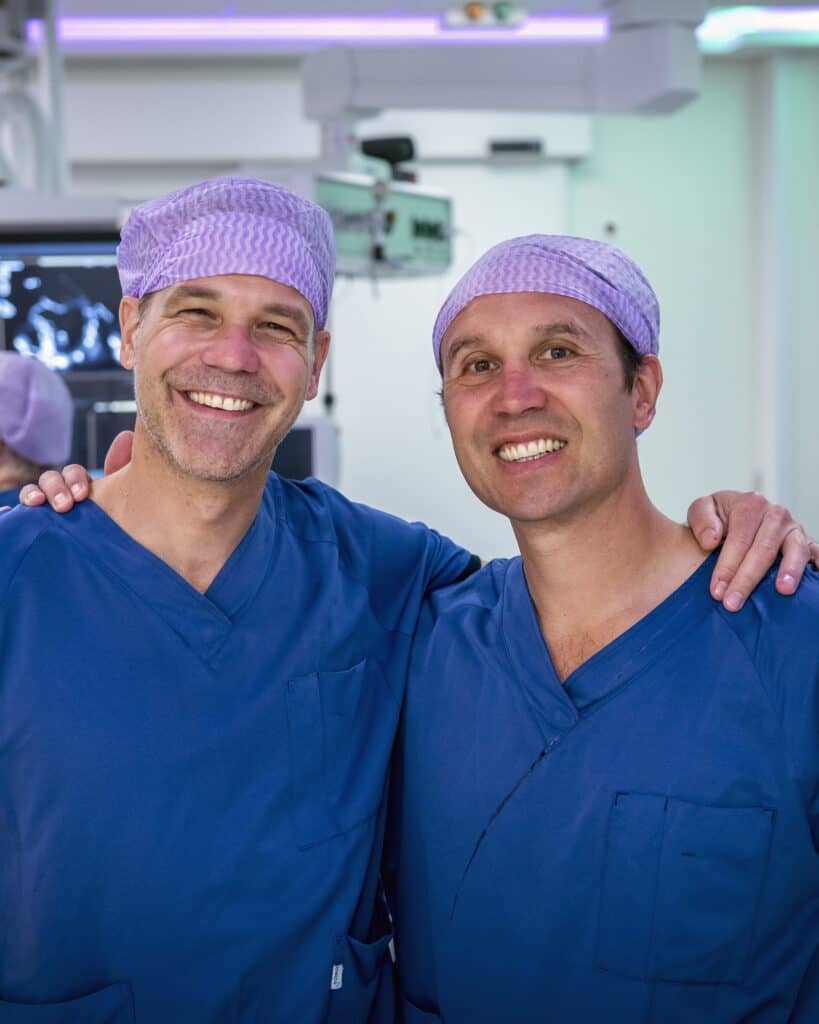
Right: Dr Leo Timmers, cardiologist at St Antonius Hospital, with a subspecialty in interventional cardiology and catheter-based cardiac procedures.
Understandably, the clinicians emphasise the importance of team work above all else, as well as “immense skill” and focus.
The procedure has come a long way since those days back in the early 2010s, and it is no longer experimental, but now features artificial intelligence assistance.
we observe the heart repair
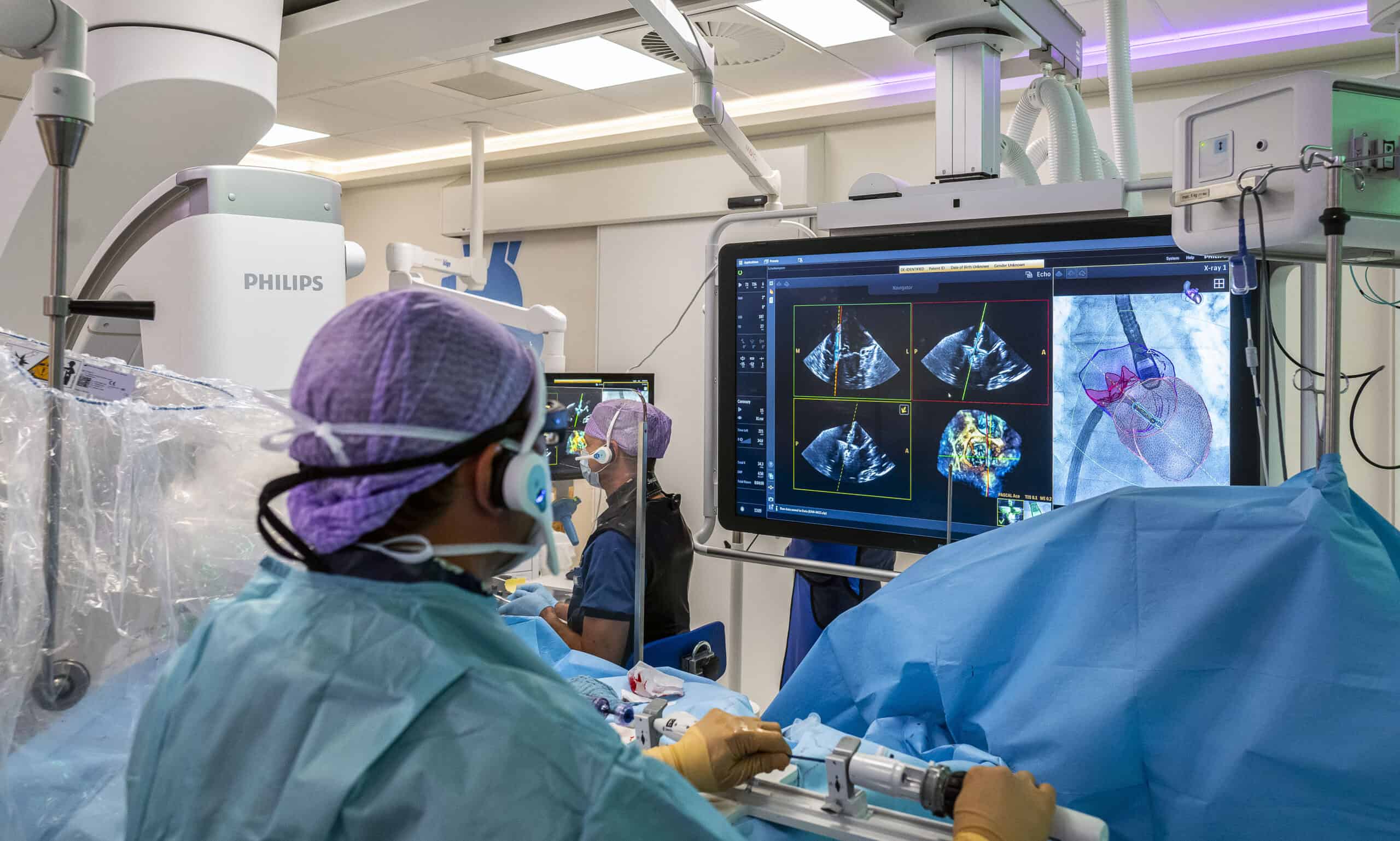
Witnessing the new AI-guided iteration in the flesh (so to speak), a handful of journalists (as well as Erica’s now adult sons) were in the room as an 81-year-old patient underwent the procedure earlier this month.
Standing at the foot of the hospital bed, dressed in full scrubs and protective X-ray aprons, the disparate group watched as the clinician inserted a thin catheter through the bedsheets – whereby it entered the incision near the groin.
Then, on large screens from which the clinician subsequently operated, the catheter moved slowly towards and then into the beating heart, crossing through a transseptal puncture from the right side of the heart to the left and eventually down to the mitral valve.
During these live heart repairs, several people operate in sync – one controlling the probe using adjustable dials, another managing images on screen and others guiding and monitoring the catheter.
The relentless coordination takes time and precision, but the newest feature of the technology, DeviceGuide, assists the process by creating one shared visual reference so everyone in the room (onlookers included) sees the same orientation of the device and anatomy.
By giving everyone the same view of the implant and surrounding anatomy, the technology reduces ambiguity and improves communication across the heart team, saving critical seconds and allowing the team to focus on the patient, rather than the imaging buttons and controls.
Azurion tracks implant
DeviceGuide was developed in close collaboration with medical hardware provider Edwards Lifesciences and is powered by Philips’ image-guided therapy system Azurion as well as EchoNavigator, a real-time image-guidance system that fuses the live X-ray and echocardiography images.
The system allows doctors to see the heart with two live imaging views at the same time – ultrasound to visualise soft tissues such as the valve, and X-ray to visualise instruments and the heart valve implant.
Using deep-learning technology, Azurion can automatically track the implant through the beating heart in real-time using both imaging modalities.
DeviceGuide also provides navigational guidance by continuously displaying the implant’s position, orientation and trajectory – reducing the need for clinicians to manually interpret complex imaging views.
The AI system also aligns and combines 2D images into a coherent 3D visualisation and analyses movement, predicting trajectory and helping guide where the device needs to go.
DeviceGuide analyses each incoming image in real time, identifies the implant’s silhouette and continuously highlights its position and orientation as it advances through the heart – allowing the entire team to follow the procedure at a glance.
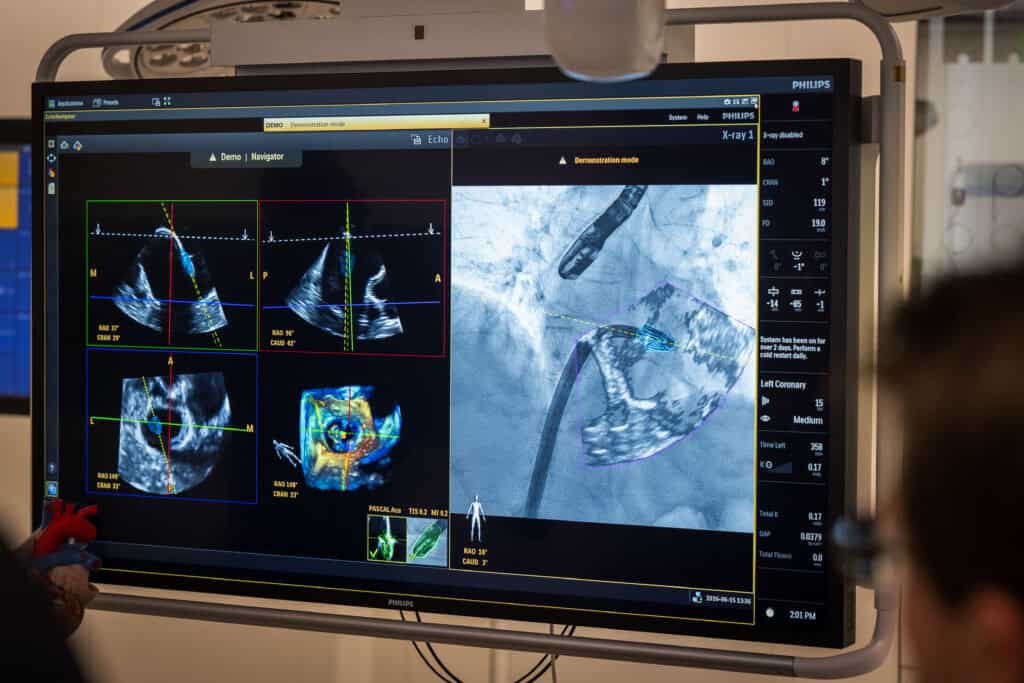
Every movement is reflected on screen immediately, described as “like a GPS for the heart” and is intended to reduce course corrections and keep the operating team on the same page.
With the implant clearly visualised against the moving anatomy, the team can then focus on placement and verification.
By embedding AI directly into the workflow, DeviceGuide is designed to offer the same precision and speed that AI is currently delivering across diagnostic imaging – but now inside the beating heart during an interventional procedure.
Trusted tech
Although a comparison to an operating theatre in the experimental days can’t be made, the calmness and assuredness of the clinicians and their team made it clear their trust in the technology and its AI features was high.
They made the navigation look easy (journalists playing with the prototype version the day before found out how difficult it really was), and when the first attachment of the repair implant wasn’t ideal, they simply unattached it and tried again (third time’s a charm).
A procedure that once took hours, reduced to around 15 minutes – no stress, field a few journalist questions in the middle of the procedure, while making time to mention the family holiday and Netherlands’ chances at the World Cup (dismissed too early I must say).
With mitral valve regurgitation affecting more than 35 million adults worldwide, thanks to this procedure and recent AI-advances in the tech that helps deliver it, it’s hoped that more people will be able to roll out of bed the day of surgery and say “Seize the Day.”
Below: Short video taken during procedure. Supplied.
Note: The author was a guest of Philips for this event.